

“Life will give you whatever experience is most helpful for the evolution of your consciousness. How do you know this is the experience you need? Because this is the experience you are having at the moment.” ― Eckhart Tolle, A New Earth: Awakening to Your Life's Purpose
When we look deeply into ourselves, we can sense an apparent distinction between the inner experiencer, “I,” and the reality that is experienced. The boundary may feel indistinct, yet it accompanies most of waking life. The first diagram presents this basic relationship.
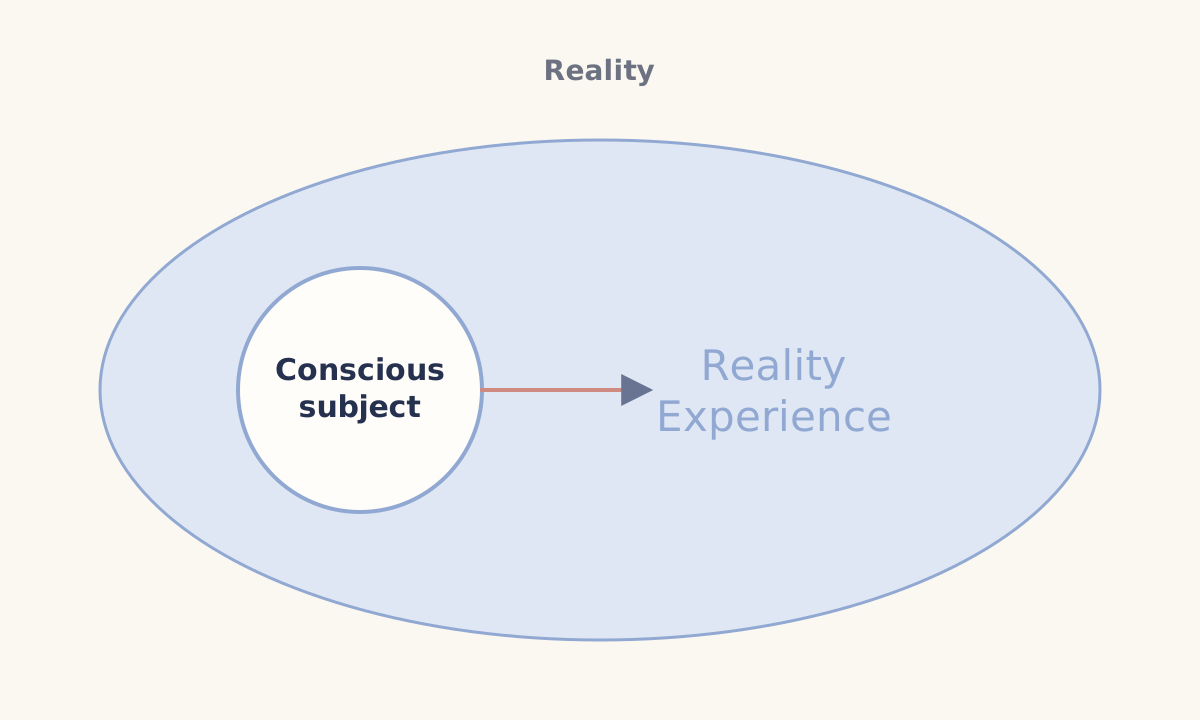
The subject and mind content
The subject is the apparent center of experience: the conscious “I” that observes reality. Its nature cannot be reduced to a single description. Within the working model of the Reintegration System, the Heart represents the stable center of being and a source of conscious presence.
The term “mind content” covers the experiences that appear to this conscious subject. For practical work, they can be grouped as follows:
- Thoughts, including mental images, inner speech, memories, and other mental representations.
- Emotions, including affective responses connected with desires, fears, relationships, and events.
- Sensations received through the body and the senses, including pleasure, pain, pressure, temperature, sound, taste, smell, and sight.
- Perceived external events and beings, which enter individual experience through sensory perception and interpretation.
The experiencer and the experienced content form the basic structure of everyday experience. The system calls the shifting point from which content is experienced the “Temporary I.”
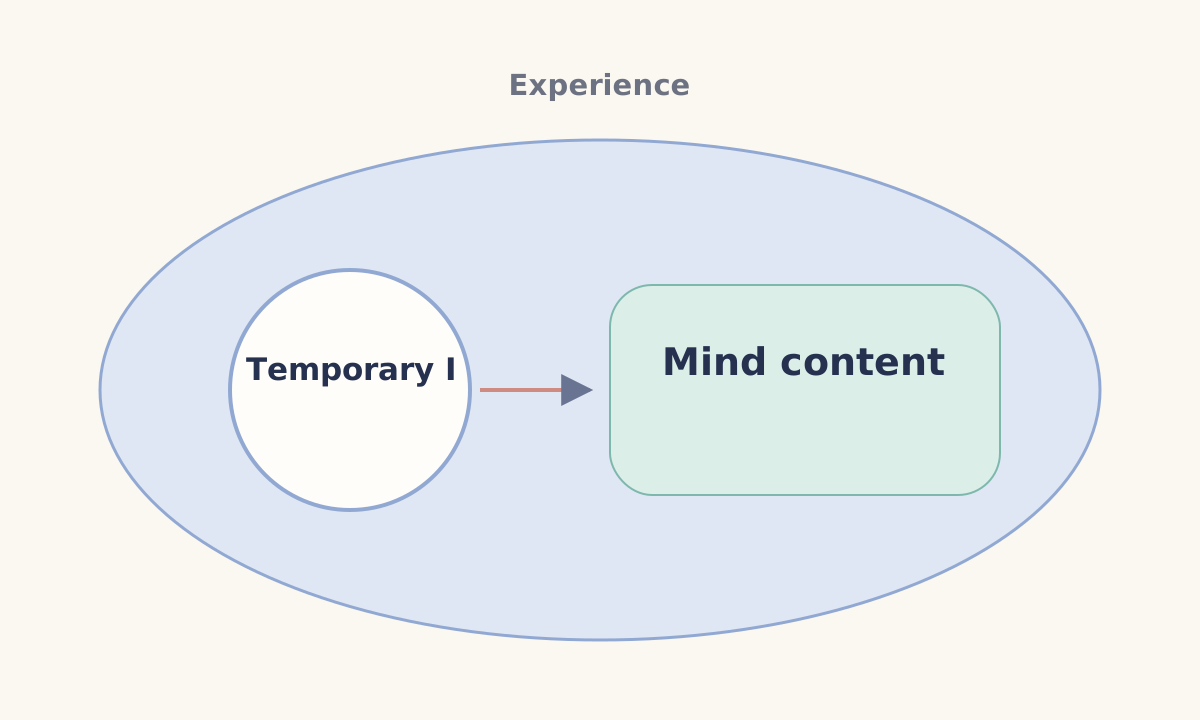
The Temporary I
The Temporary I is not treated as a fixed center. Its felt location can change with attention, emotion, posture, and state of consciousness. It may appear in the head, throat, chest, abdomen, another part of the body, or occasionally beyond the perceived bodily boundary.
You can explore this directly while reading. Where does the sense of “I” seem to be located? From which point do you experience the words, thoughts, bodily sensations, and surrounding space? The exercise asks for observation rather than a forced answer.
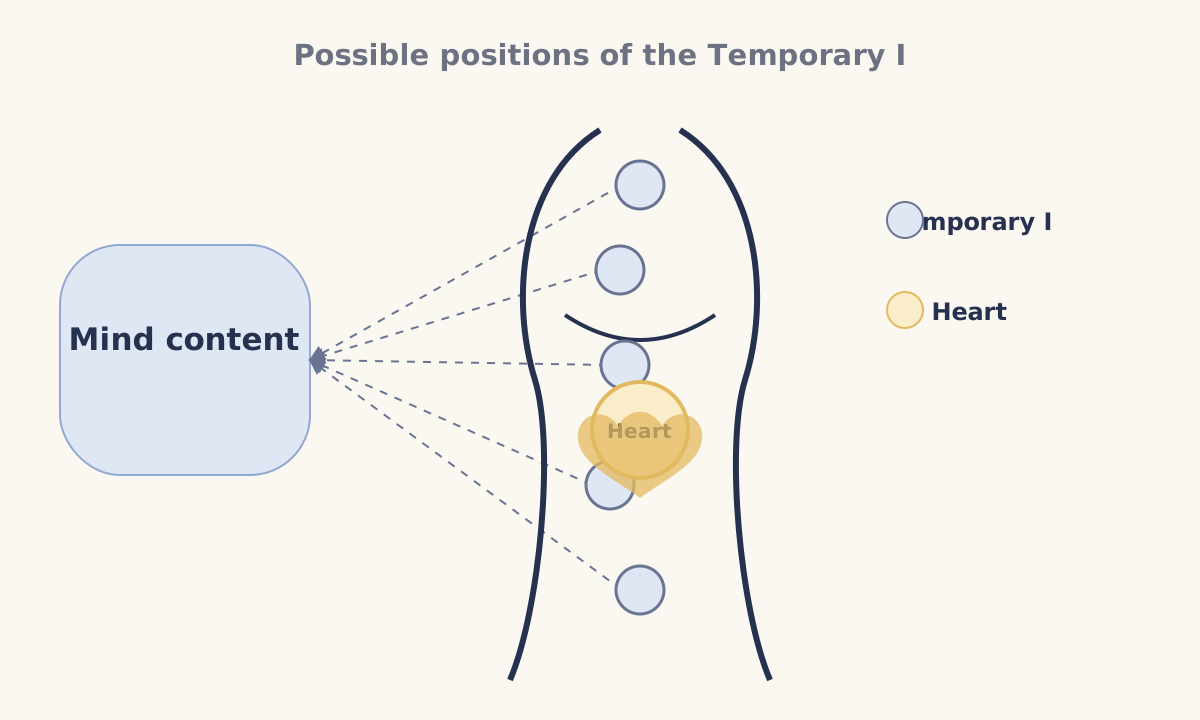
The Heart as the orienting center
In the Reintegration System, “Heart” names the central I-point in the chest area. It does not mean the anatomical heart. This is a practical contemplative model rather than a medical or anatomical claim. The model treats the Heart as an orienting center for presence, coherence, love, and the integration of experience.
Feel your presence in the place where you are sitting. Turn your attention inward and notice where the center of experience seems to be. Guess gently. Allow the answer to be uncertain. Notice the Temporary I without trying to move, correct, or suppress it.