
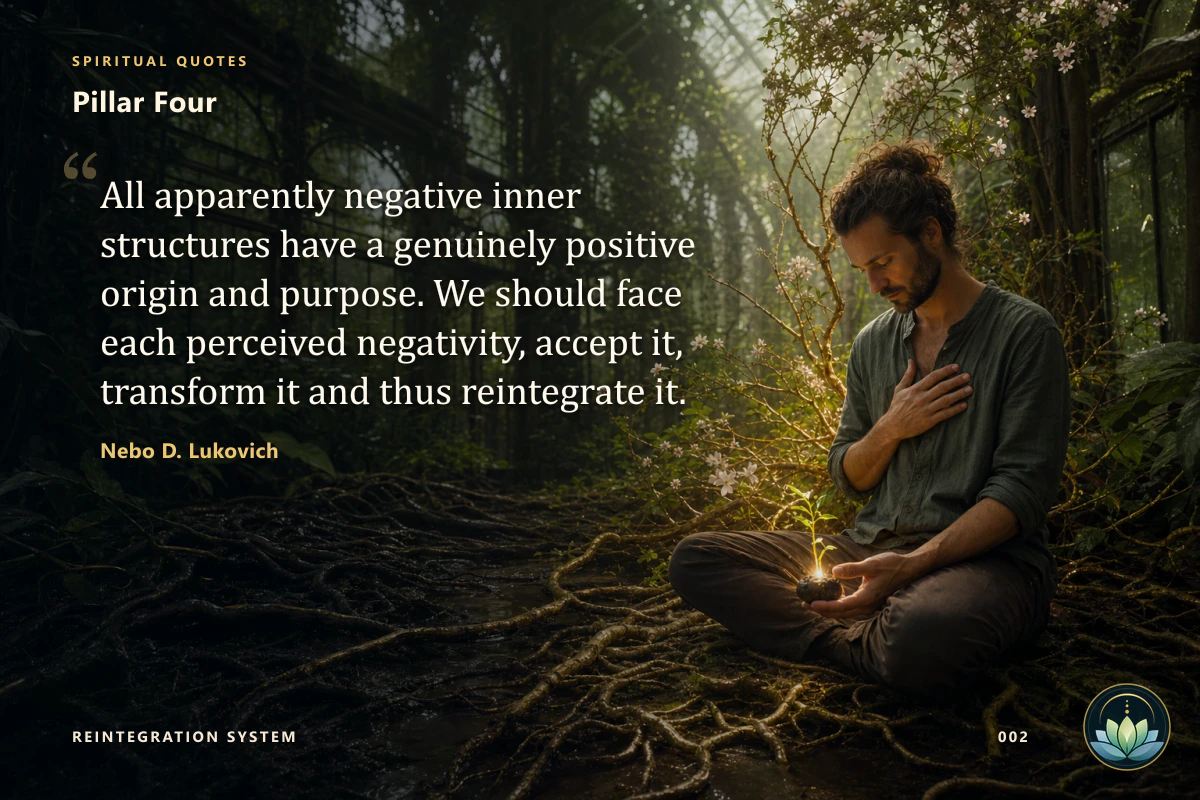
All apparently negative inner structures have a genuinely positive origin and purpose. We should face each perceived negativity, accept it, transform it and thus reintegrate it.
Inner Sparks
A thematic collection of visual insights from the Reintegration System for daily practice and reflection.

Thematic collection
The posters are arranged in thematic chapters. Each image can be opened, saved and shared in its original form.
Posters shown: 117
53
Beliefs, emotions, habits, identity and the practical work of inner integration.
All apparently negative inner structures have a genuinely positive origin and purpose. We should face each perceived negativity, accept it, transform it and thus reintegrate it.
Remove a chosen mind content. Transform it. Create it.
Our personalities are complex aggregates of elements. Some of those elements are multifaceted. Our psyche contains subpersonalities, complexes, traits, and other mental and emotional patterns.
Look around you. Feel your presence in the room. Turn your attention inward and sense the center of your being. It may be in your head, neck, upper chest, or somewhere else. Accept its location without trying to change it.
Thoughts are purely mental entities, including mental images and replicas of bodily experience. Emotions are energy entities that arise mostly from desires and fears. Sensations are experienced through the body and its senses.
Rules are patterns of behavior imposed on us in the past that we still obey subconsciously. They may be self-imposed or externally imposed. In both cases they appear as orders or prohibitions.
We should appreciate the presence of emotions and other parts of our being. They are trying to give us a valuable message.
You will feel immense relief and deliverance. You will release yourself from an inner prison. You will sense limitlessness.
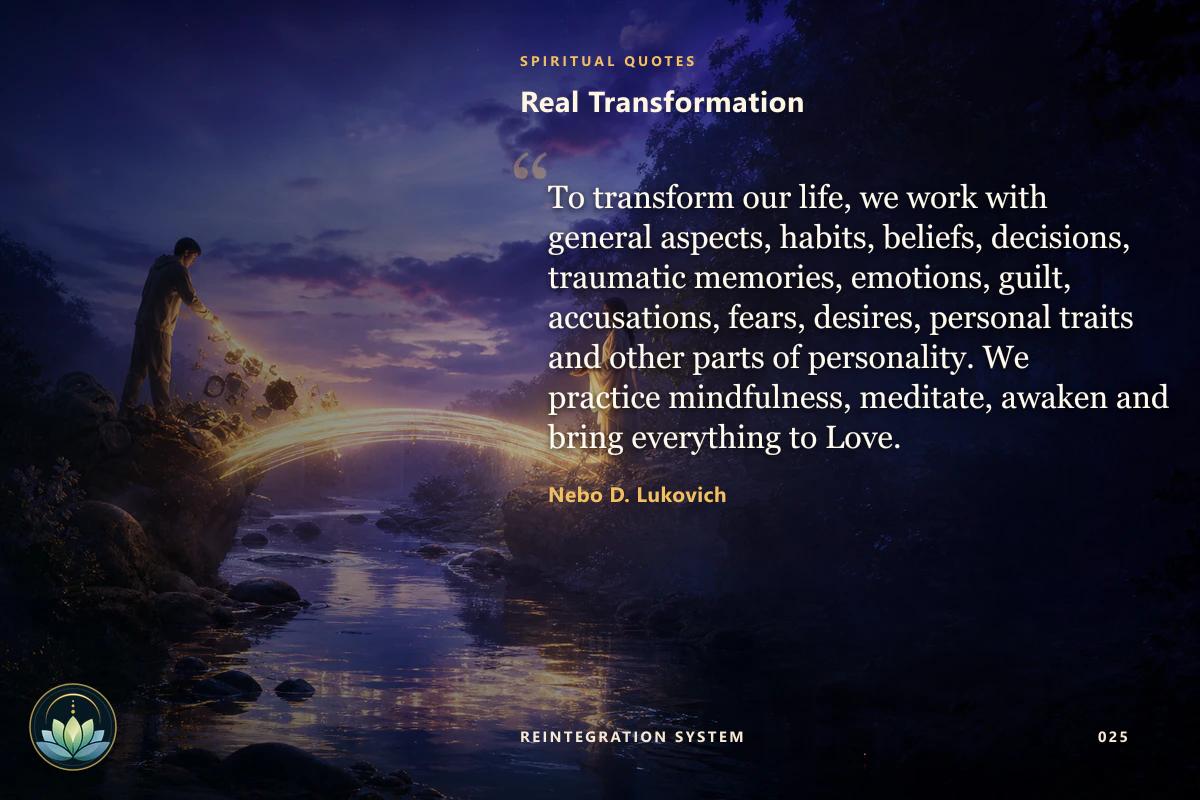
To transform our life, we work with general aspects, habits, beliefs, decisions, traumatic memories, emotions, guilt, accusations, fears, desires, personal traits and other parts of personality. We practice mindfulness, meditate, awaken and bring everything to Love.
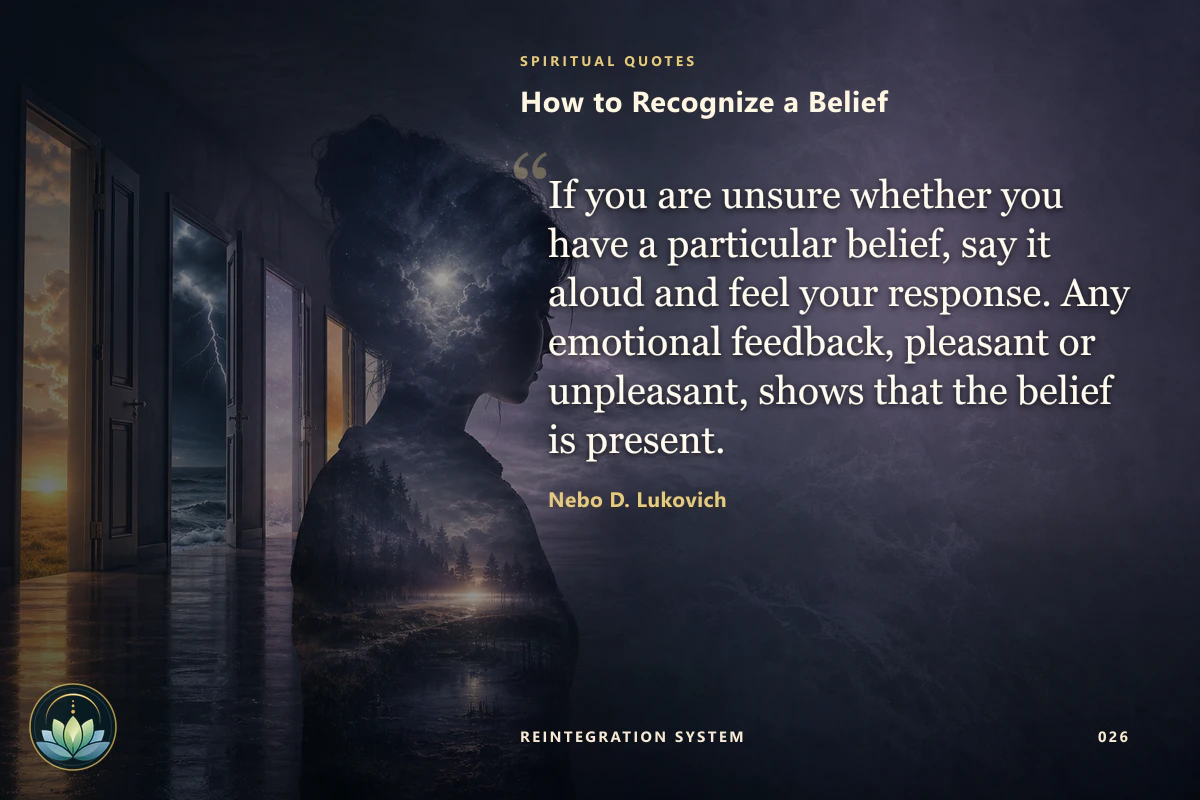
If you are unsure whether you have a particular belief, say it aloud and feel your response. Any emotional feedback, pleasant or unpleasant, shows that the belief is present.
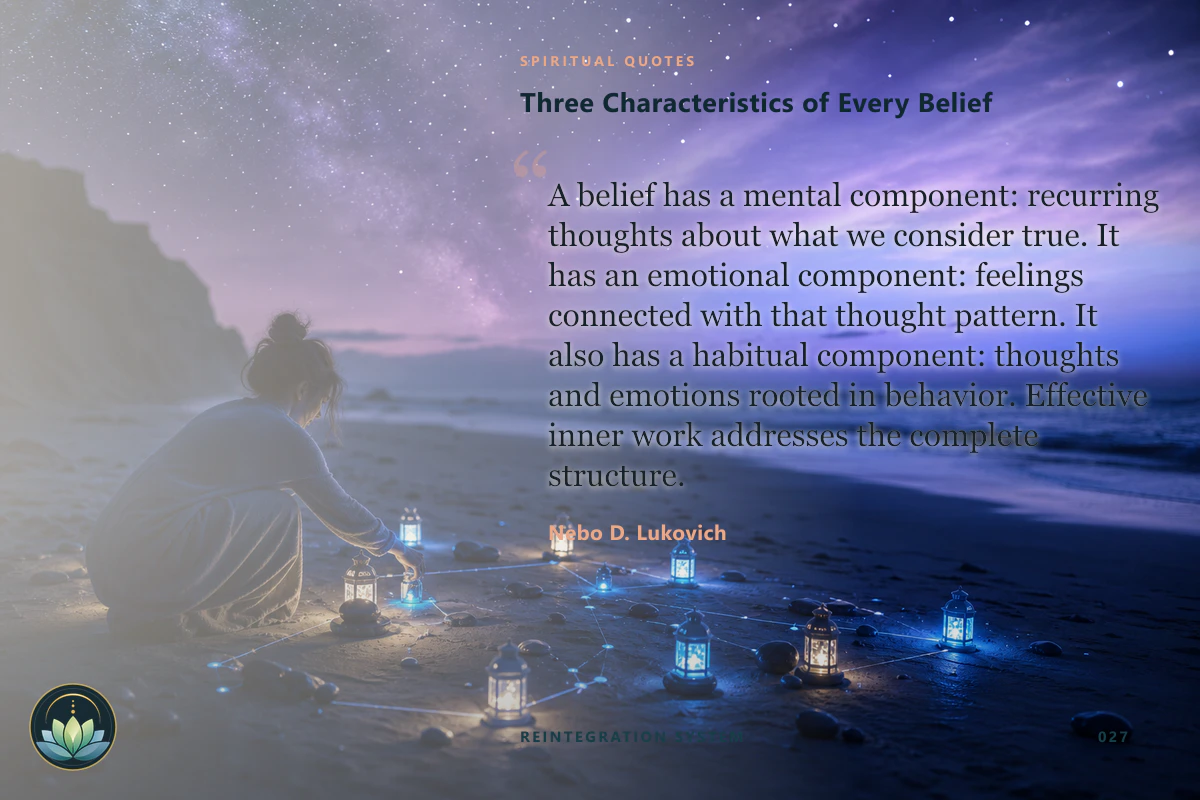
A belief has a mental component: recurring thoughts about what we consider true. It has an emotional component: feelings connected with that thought pattern. It also has a habitual component: thoughts and emotions rooted in behavior. Effective inner work addresses the complete structure.
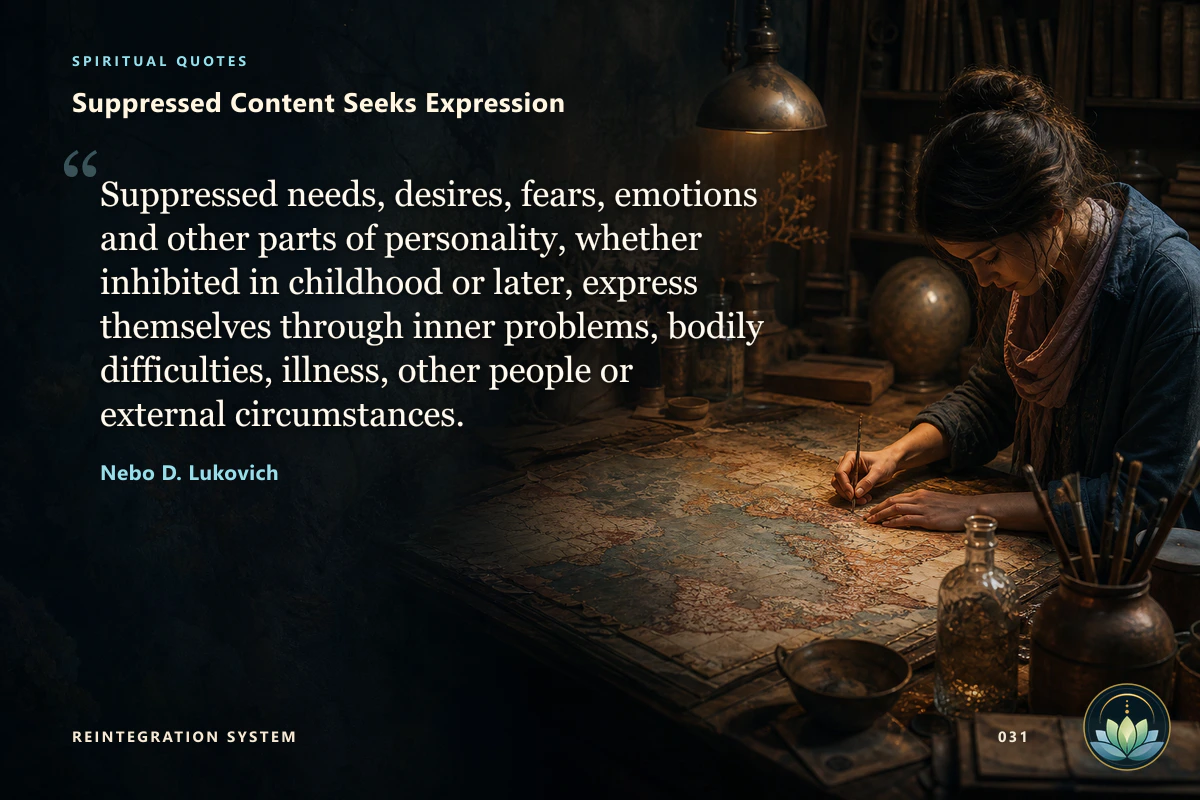
Suppressed needs, desires, fears, emotions and other parts of personality, whether inhibited in childhood or later, express themselves through inner problems, bodily difficulties, illness, other people or external circumstances.
If you do not change your framework or core beliefs, a positive achievement may be followed by a negative experience that restores the balance defined by your existing belief framework.
Most beliefs are formed in childhood, when we are highly receptive to our parents' views. Repetition strengthens those beliefs until they become real forces that limit or defeat our potential achievements.
Beliefs are our little truths about everything. Underlying emotions support them until they become strong mental habits. They often appear as recurring thoughts and feelings about a particular subject.
The Temporary I is the subtle feeling of self within your body while you experience a mind content. It is commonly sensed in the head, neck or upper chest. Pure observation can reshape the temporary experience. When the Temporary I dissolves, the experience it produces also dissolves.
In the Reintegration System, a problem or unwanted state of mind is viewed as a distinct part of personality and reintegrated into the unity of one's being.
The original state of every being is happiness, expressed mainly through Peace, Love and Joy. A difficult environment can produce limiting beliefs and perceptions. This begins a gradual Chain of Goals in which each step seeks a better state than the one before it.
Thoughts are mental entities that include images and replicas of bodily experience. Emotions are energy contents arising mainly from desires and fears. Sensations come through the body's senses, including pleasure, pain, touch, sight, sound, taste and smell.
Disharmony or collision among parts of personality affects the stability of the energetic body and, ultimately, the functioning of the physical body.
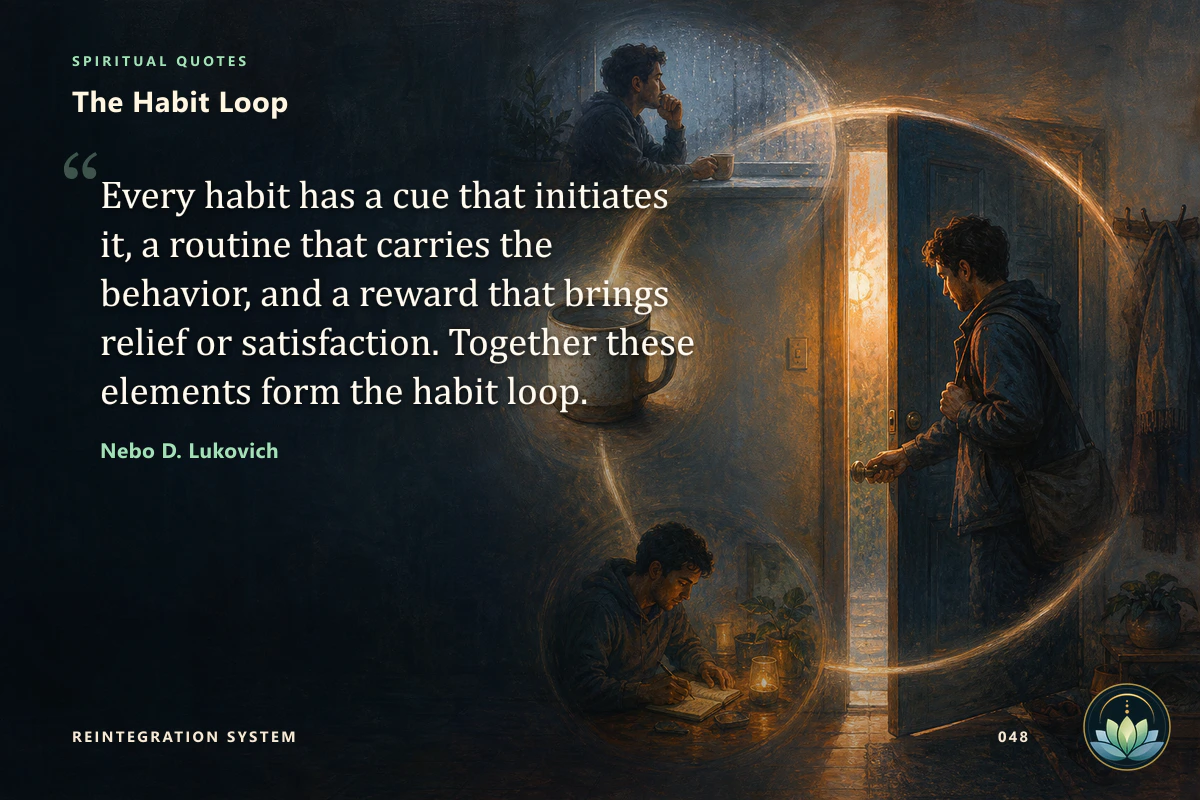
Every habit has a cue that initiates it, a routine that carries the behavior, and a reward that brings relief or satisfaction. Together these elements form the habit loop.
Staying mindful while thinking means observing your own thoughts while you think them.
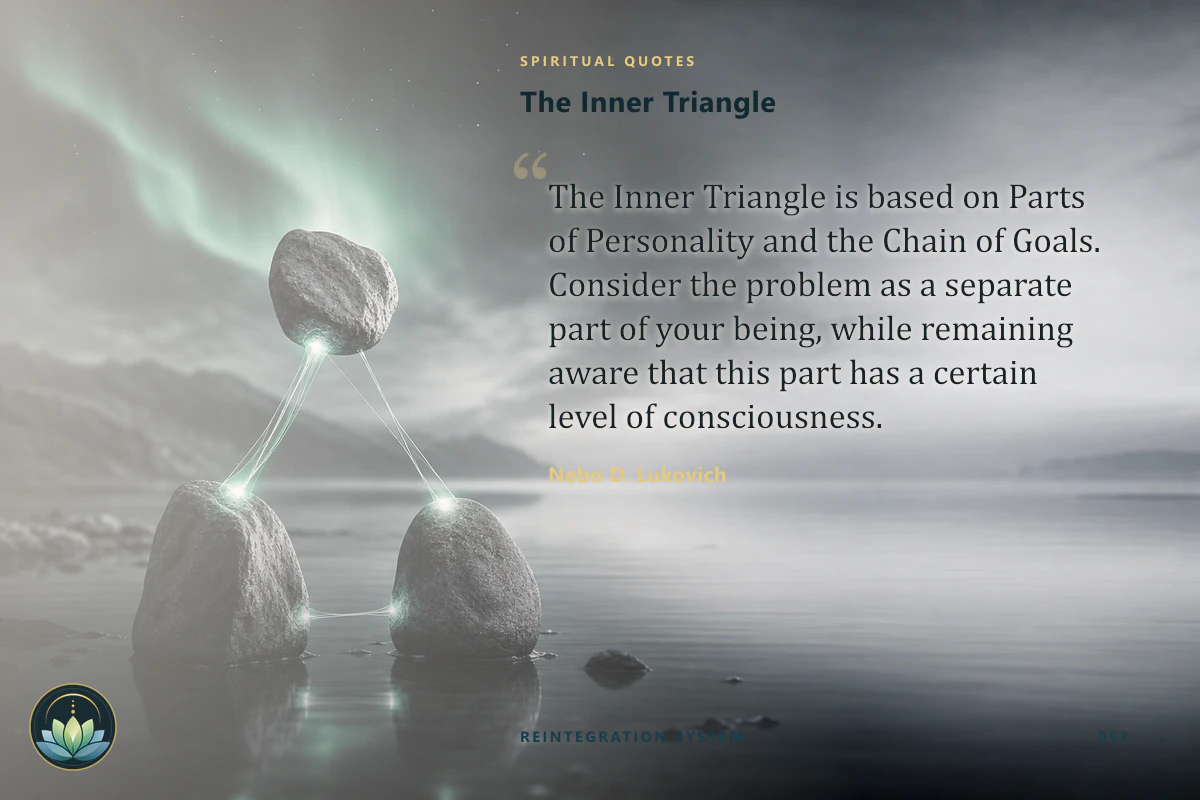
The Inner Triangle is based on Parts of Personality and the Chain of Goals. Consider the problem as a separate part of your being, while remaining aware that this part has a certain level of consciousness.
Unfounded fears arise from imagined threats. They undermine health, confidence, desires, plans, hopes and relationships.
We should appreciate the presence of emotions and other parts of our being. They are trying to give us a valuable message.
Habits are patterns through which parts of personality and their corresponding behaviors are expressed regularly.
A cue or trigger. A routine. A reward. Together they form the habit loop.
Recent research suggests that one effective way to change an unwanted habit is to replace the routine while recognizing the same cue and reward.
As with other parts of personality, we should understand fears and aversions before transforming them. They can have a positive role in our maturing into a well-integrated spiritual person.
Even a positive trait can hinder important areas of life. Honesty, for example, may obstruct a desire for wealth if you believe rich people are dishonest. Positive traits also deserve harmonization.
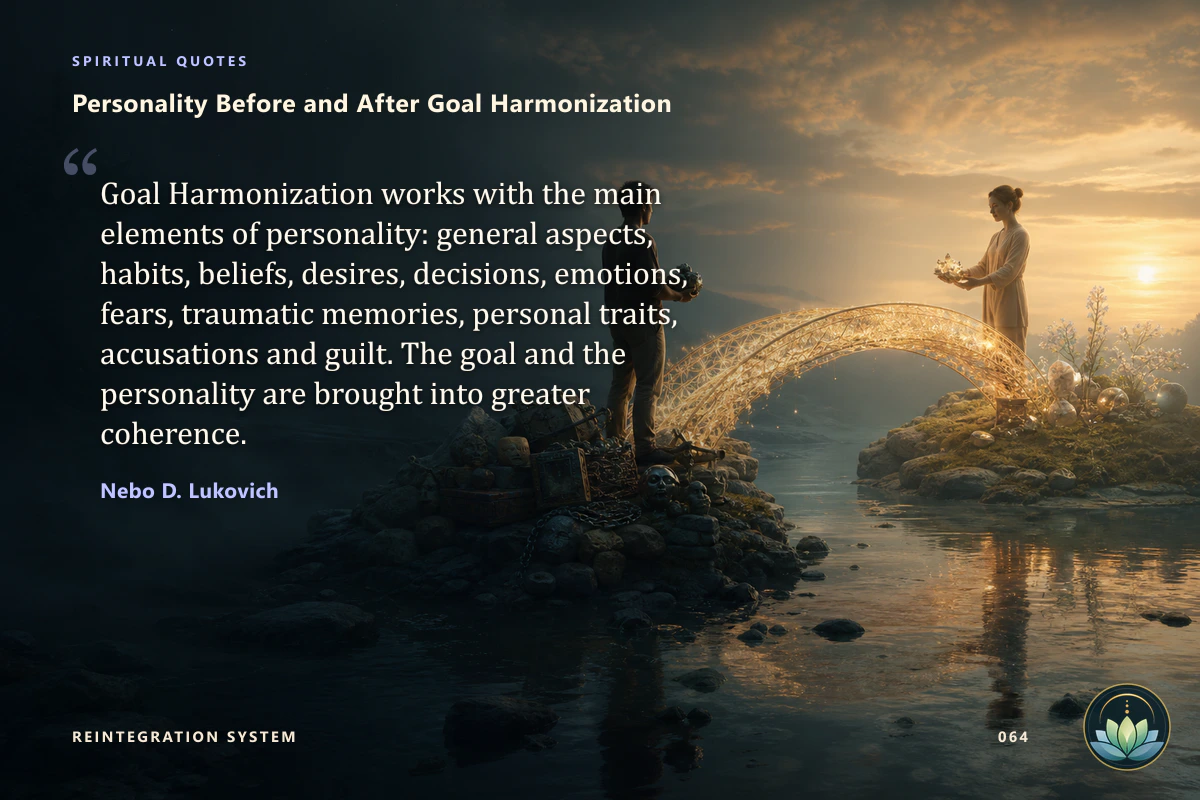
Goal Harmonization works with the main elements of personality: general aspects, habits, beliefs, desires, decisions, emotions, fears, traumatic memories, personal traits, accusations and guilt. The goal and the personality are brought into greater coherence.
In their original state, emotions were positive in nature. Anger was determination or firmness. Fear was caution or thoughtfulness. Pain was seriousness or diligence. Each can support our maturation into a well-integrated spiritual person.
Every emotion has a trigger, usually a recurring situation in everyday life. The connection becomes tight and habitual. We may work with the trigger, or integrate the emotion itself.
Write down the names of the people most involved in the event. Re-enter the memory and feel the related emotions. Apply DTI to the Temporary I with a suitable statement, then identify with each person and repeat DTI from their point of view.
Unfounded fears arise from imagined threats. They undermine health, confidence, desires, plans, hopes and relationships.
The parts of personality we call good or positive may be traits such as honesty, reliability, efficiency, decisiveness and perfectionism. They may also be beliefs, habits, decisions or desires. Every element benefits from conscious balance.
Fears and aversions deserve understanding before transformation. They can play a positive role in our maturation into a well-integrated spiritual person.
Staying mindful while thinking means observing your own thoughts while you think them.
Every emotion originally enables an appropriate response to experience. Emotions are valuable indicators of deeper limiting elements that distort perception. Appreciate them and reintegrate them gently.
Guilt is one of the strongest obstacles to a healthy way of life. It is a self-destructive emotion that can endanger health and life in general.
There is no limit to the practical use of DTI. A few seconds of mild, conscious effort can create profound detachment from an unpleasant situation.
DTI+ can be applied to unpleasant experiences in everyday life. At the end of the exercise, deliberately move from Presence into a desired experience that replaces the previous one.
When thoughts overwhelm you, dissolve the vantage point from which you experience them. When emotions flood you, locate the Temporary I and begin the technique. In the company of an irritating person, work quietly with the Temporary I that feels the annoyance.
While sitting and free from demanding activity, you can remove or reintegrate a distraction with Dissolving the Temporary I Plus.
A powerful way to develop everyday mindfulness is to set triggers in familiar situations and activities. With practice, they become habitual signals that return you to awareness.
Accept whatever distracts you without automatic reaction, unless you face real danger. Reintegrate the distracting mind content or your reaction to an outer distraction with a basic Reintegration technique.
List your usual activities and their small characteristic details. Let those details become triggers that return you to Presence, here and now.
A familiar path. Brushing your teeth. Opening or closing a door. Sitting down or standing up. Arriving at a particular place. Thinking a chosen thought.
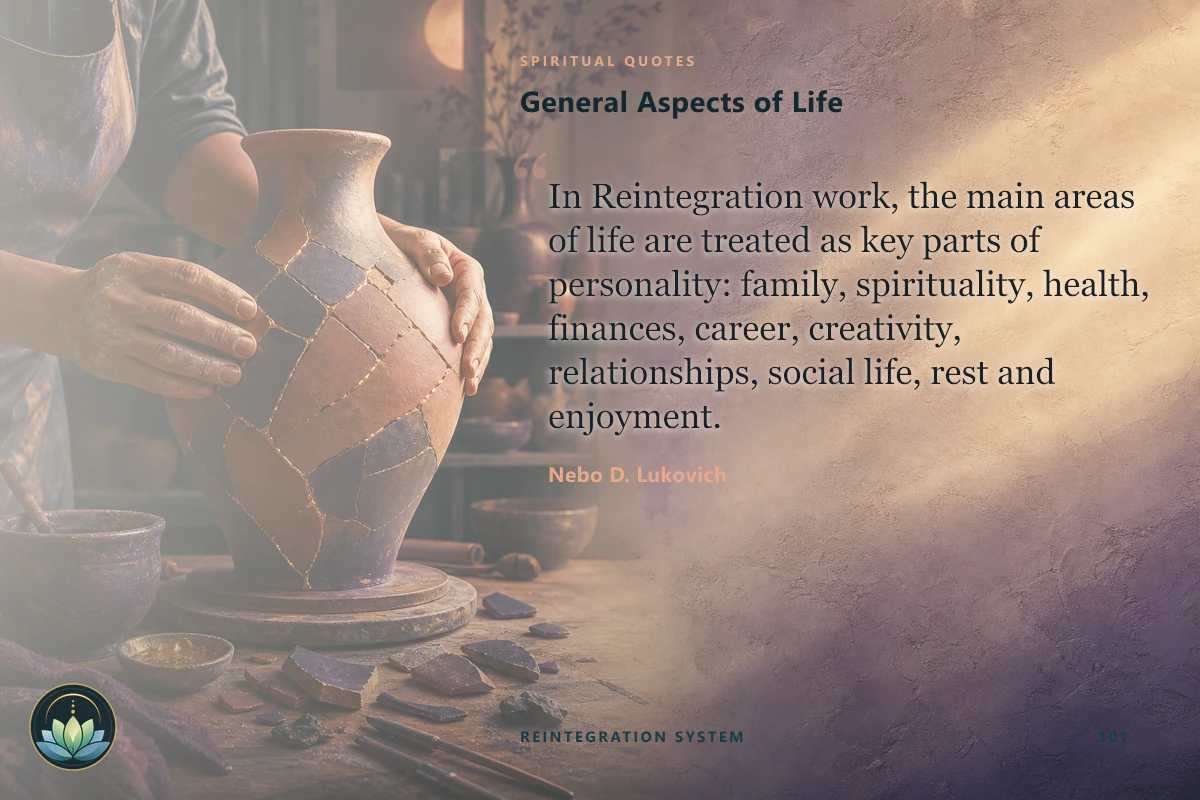
In Reintegration work, the main areas of life are treated as key parts of personality: family, spirituality, health, finances, career, creativity, relationships, social life, rest and enjoyment.
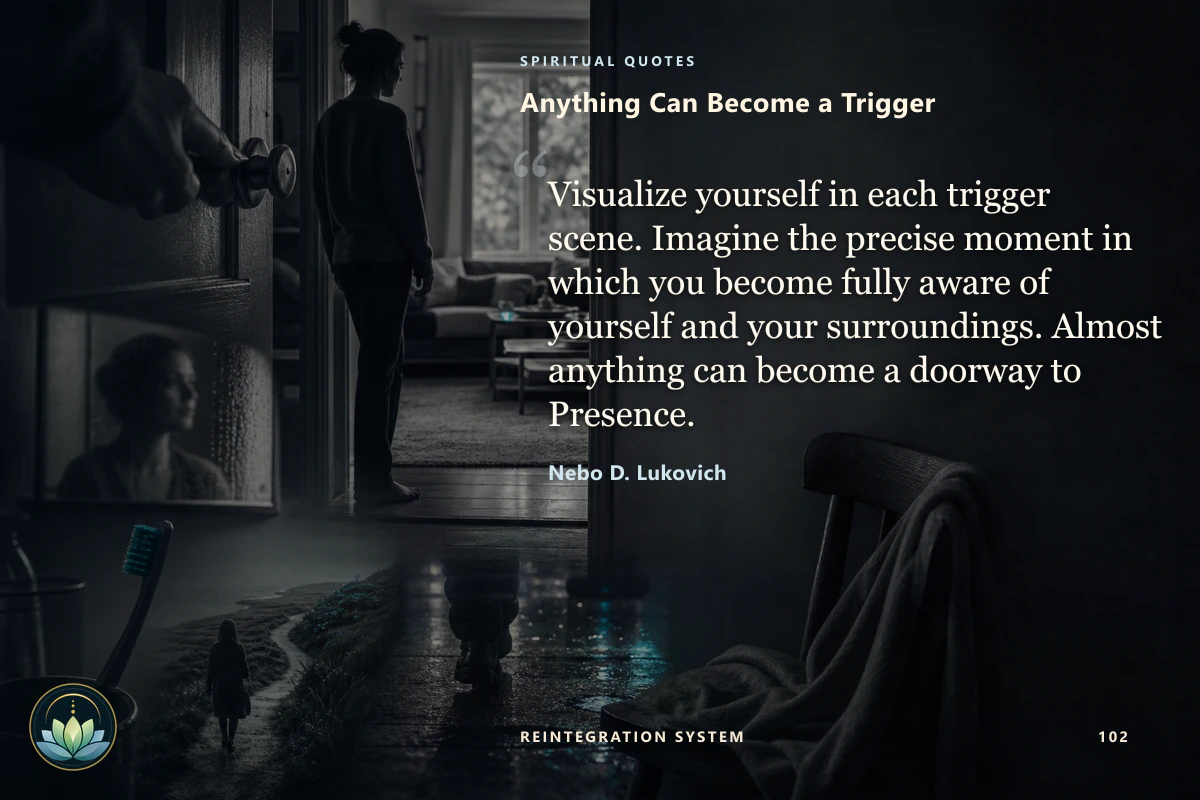
Visualize yourself in each trigger scene. Imagine the precise moment in which you become fully aware of yourself and your surroundings. Almost anything can become a doorway to Presence.
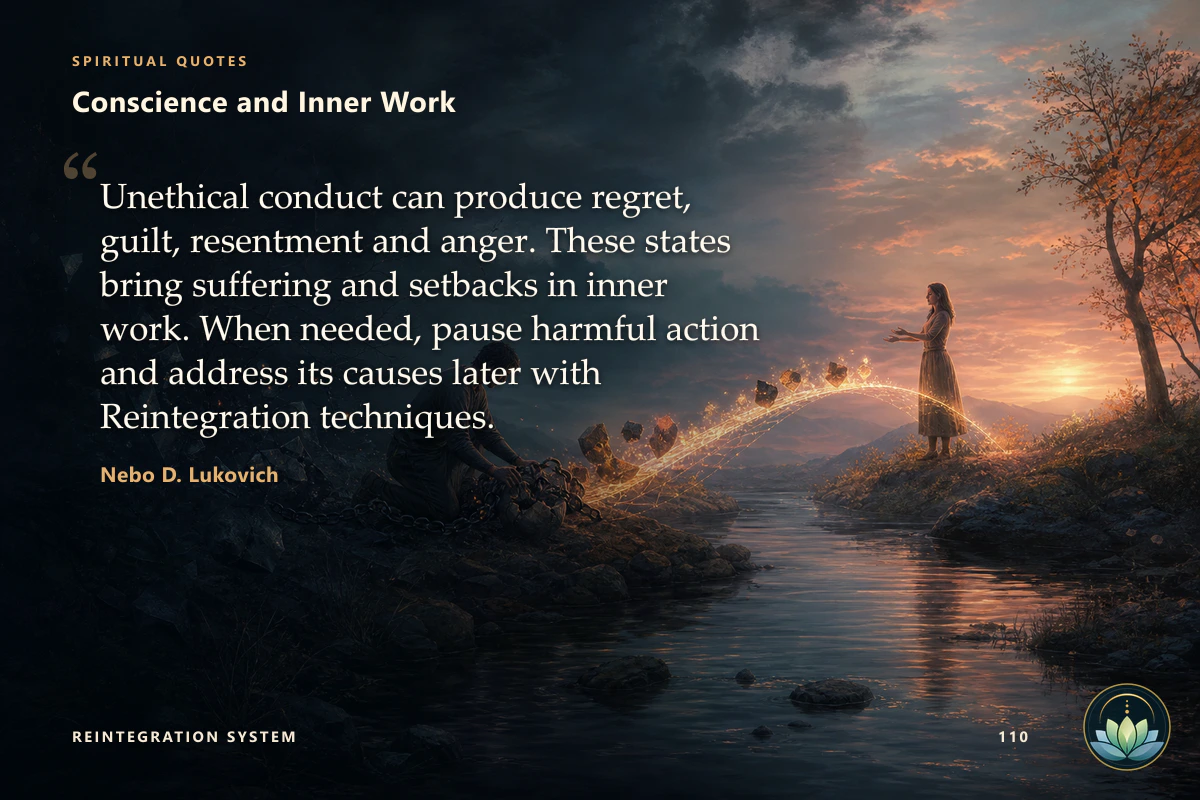
Unethical conduct can produce regret, guilt, resentment and anger. These states bring suffering and setbacks in inner work. When needed, pause harmful action and address its causes later with Reintegration techniques.
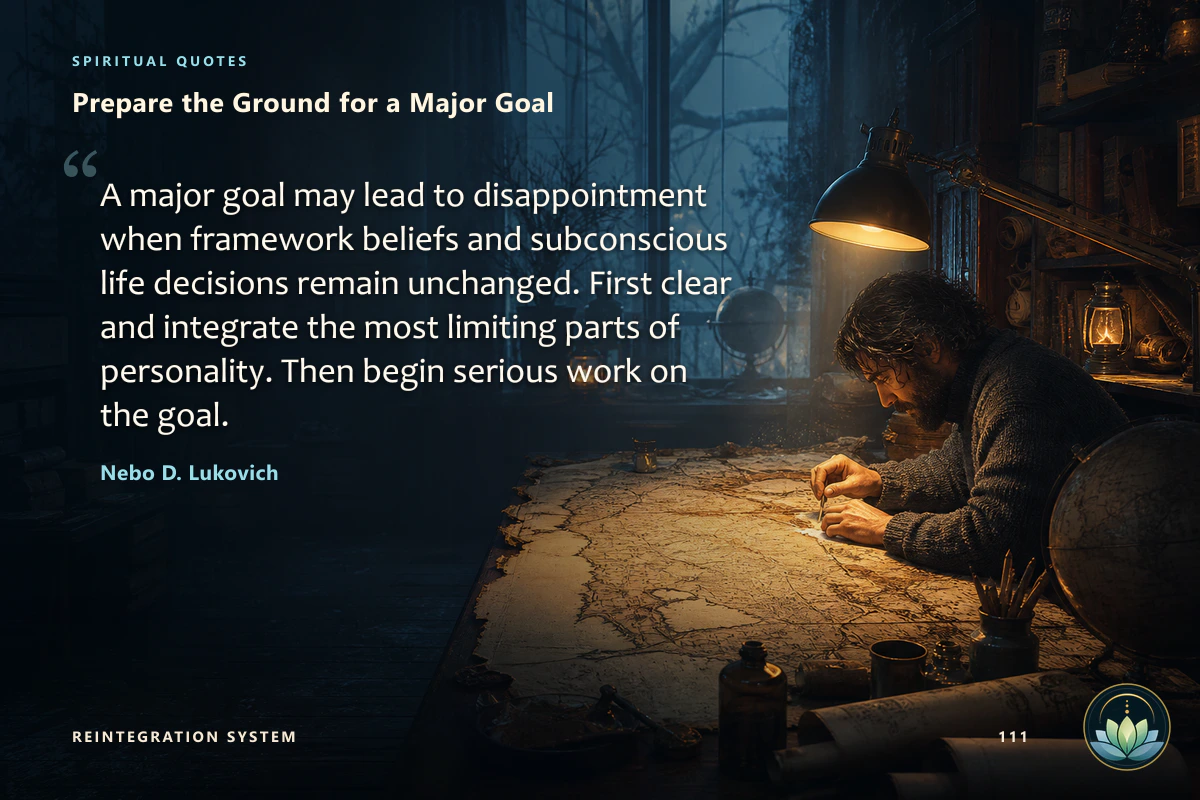
A major goal may lead to disappointment when framework beliefs and subconscious life decisions remain unchanged. First clear and integrate the most limiting parts of personality. Then begin serious work on the goal.
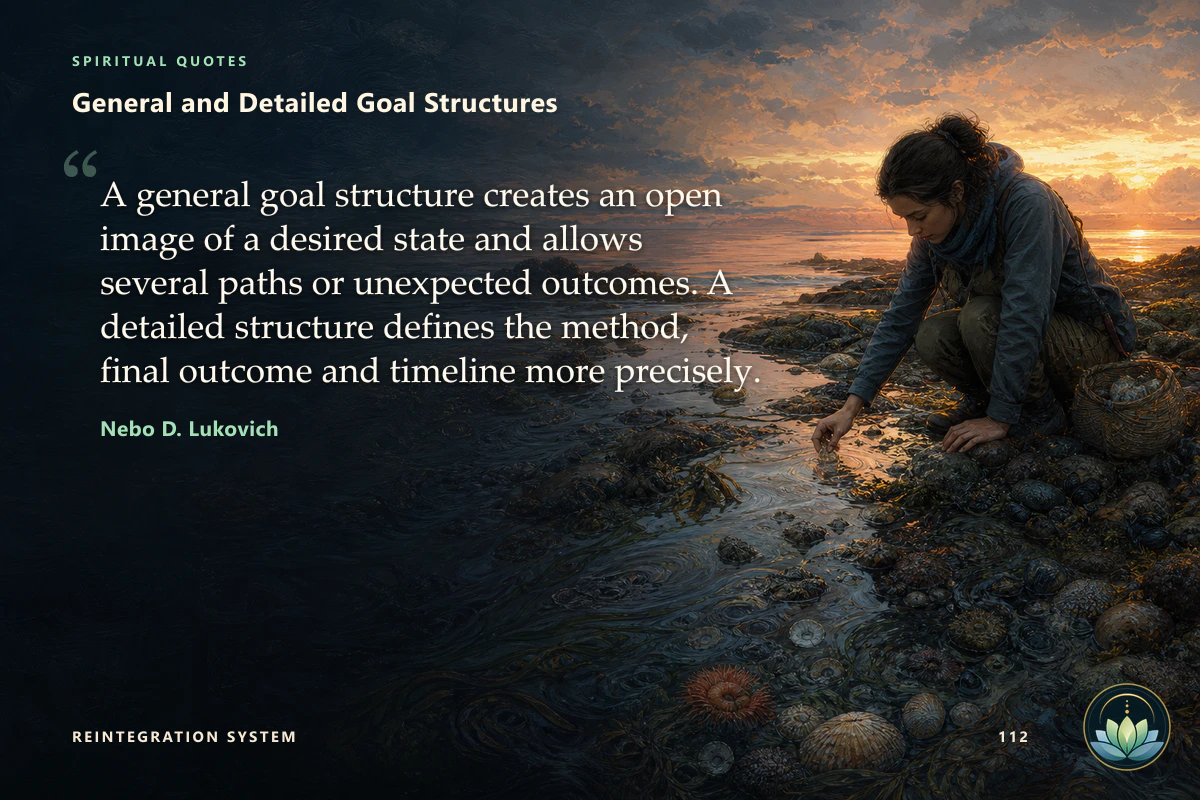
A general goal structure creates an open image of a desired state and allows several paths or unexpected outcomes. A detailed structure defines the method, final outcome and timeline more precisely.
13
Love, relationships, forgiveness and the restoration of genuine closeness.

Love dissolves anger. Peace dissolves fear. Joy dissolves gloom.
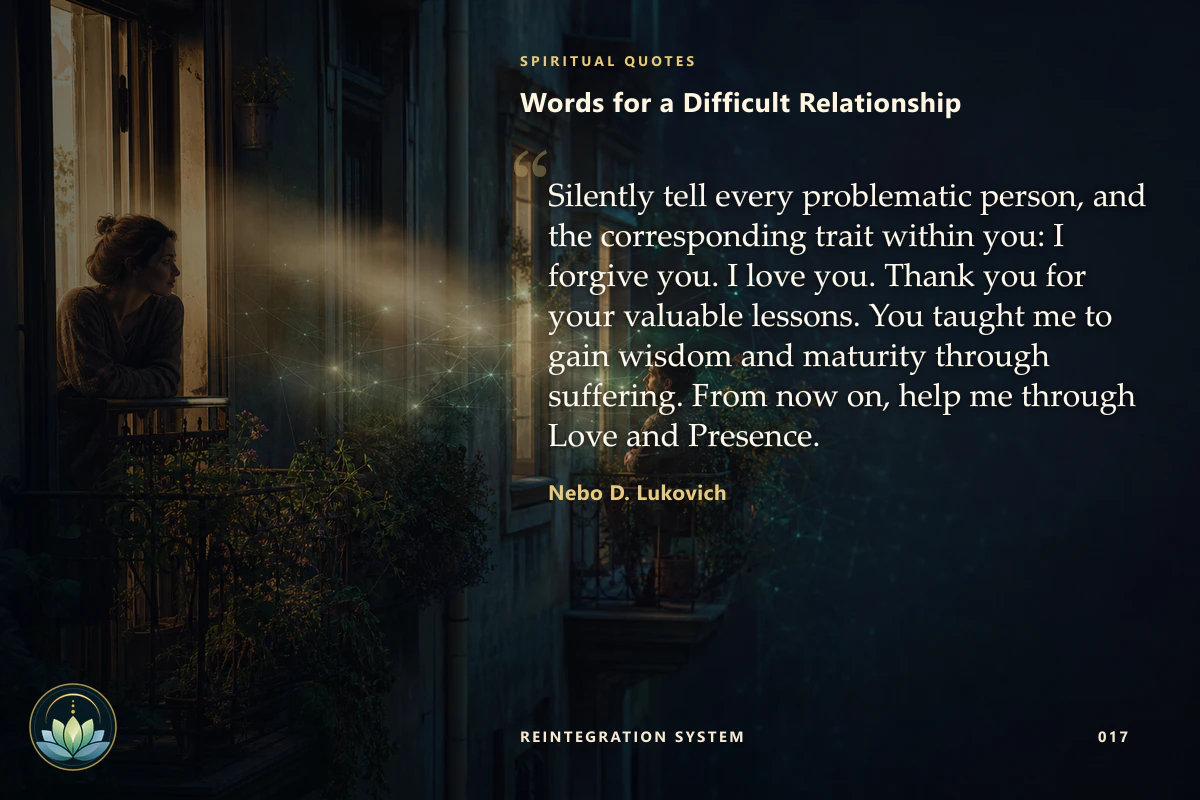
Silently tell every problematic person, and the corresponding trait within you: I forgive you. I love you. Thank you for your valuable lessons. You taught me to gain wisdom and maturity through suffering. From now on, help me through Love and Presence.
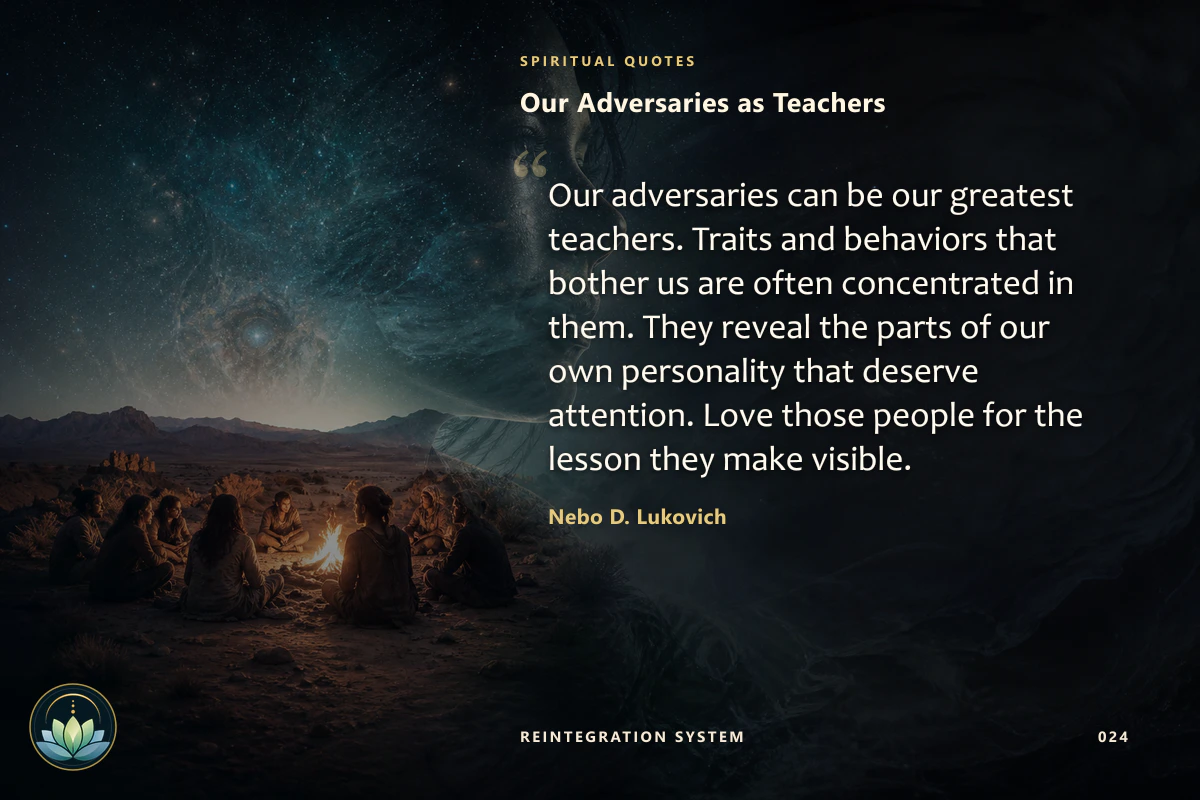
Our adversaries can be our greatest teachers. Traits and behaviors that bother us are often concentrated in them. They reveal the parts of our own personality that deserve attention. Love those people for the lesson they make visible.
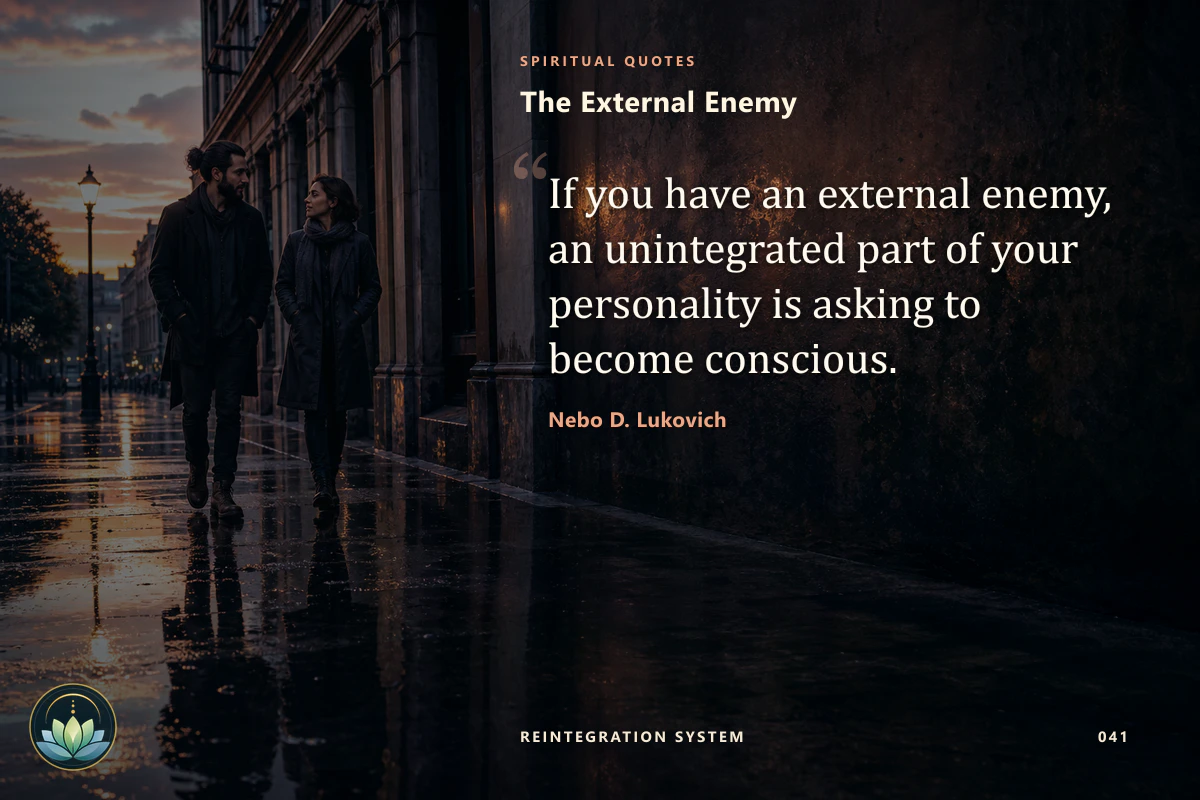
If you have an external enemy, an unintegrated part of your personality is asking to become conscious.
From time to time, silently tell your companion: I wish you to be truly happy, my dear friend. Feel love for them. It does not matter whether you know the person.
Resentment toward others and guilt about our deeds can undermine health and relationships. List the important people in your life. Notice resentment and guilt connected with each person, then forgive them sincerely. Clear limiting framework beliefs and subconscious life decisions before serious work on major goals.
If centering in the Heart feels difficult, sense the Heart area within your body as fully as you can. Stay with it. Gradually you may begin to perceive reality from that center. Remain there comfortably, without forcing the experience.
DTI+ is an act of unifying mind and Heart. It combines Dissolving the Temporary I with Moving to the Heart.
First, dissolve the unwanted mind content and rest in pure consciousness. Then introduce a new content and merge it with the will of the Heart.
Imagine an innocent being that awakens Love in you: a smiling child, a beloved animal or someone you love deeply. Feel Love for that being, then for yourself. Let it embrace your life, relationships, imperfections and the whole of existence.
Love, like Presence, dissolves negativity within us. We can support healing in ourselves and others through Love. A fully and lastingly open Heart can become a foundation for profound recovery.

Thoughts, prayers and actions should arise from the Heart and be guided by truth and Love. An honest act done from the Heart has genuine healing power.
People around us embody elements of our personality. By clearing interactions with them, we reintegrate traits, beliefs, fears, desires and other aspects projected outward. Even harmonious relationships may reveal useful inner contradictions.
23
Presence, embodied awareness and the quiet intelligence of the living world.
Listen closely. Let the living world remind you of the quiet wholeness already present within.
The supreme happiness of being is threefold: Love, Peace and Joy.
Life will give you whatever experience is most helpful for the evolution of your consciousness. How do you know this is the experience you need? Because this is the experience you are having at the moment.
During the initial period of meditation and mindfulness practice, avoid overdoing it. Strong energy, emotions or bodily sensations may surface. If this happens, shorten your sessions by five or ten minutes. Remain persistent and advance gradually.
When a painful experience rises from the swamp of our inactivity, it pushes us forward. Through shocks and traumas we gain depth of personality. Our wounds can become blessings.
Remain consistent in your work. Practice and repeat until the process becomes intuitive and habitual.
Mindfulness during everyday tasks can make life easier and soften future challenges. Every conscious moment in the Now accumulates and joins all previous conscious moments.
Lasting change may arise through suffering, when we learn difficult lessons through obstacles and disappointment. It may also arise through wisdom, when we choose Love, consciousness and a more effective path.

Focus on sensations in the nostrils during inhalation and exhalation. You may also attend to the feeling of air filling and emptying the lungs.
Mindfulness during everyday tasks can make life easier and soften future challenges. Every conscious moment in the Now accumulates and joins all previous conscious moments.
The time has come to remove the unpleasant emotional charge and other negative personality elements clustered around painful events from the past. We can enter a new phase in which pain is no longer needed for progress.
Freshness: perceive the content as though it were completely new. Acceptance: accept the content wholeheartedly.
Freshness means perceiving the content as though it were completely new. Acceptance means receiving it wholeheartedly, with neither attachment nor aversion.
Most of us have matured and learned tremendous lessons through painful experiences. They strengthened and moved us. Material life has inertia, and inertia is also one of our own traits.
You will feel immense relief and deliverance. You will release yourself from an inner prison. You will sense limitlessness.
While waiting at a red traffic light, release anxious thoughts. Become aware of breathing, sensations and sounds. Return to the Now.
Use every walk as a short meditation. Slow down and feel each step, the movement of your limbs, contact with the ground, breathing, the Heart and the whole body. Turn each step into a small poem.
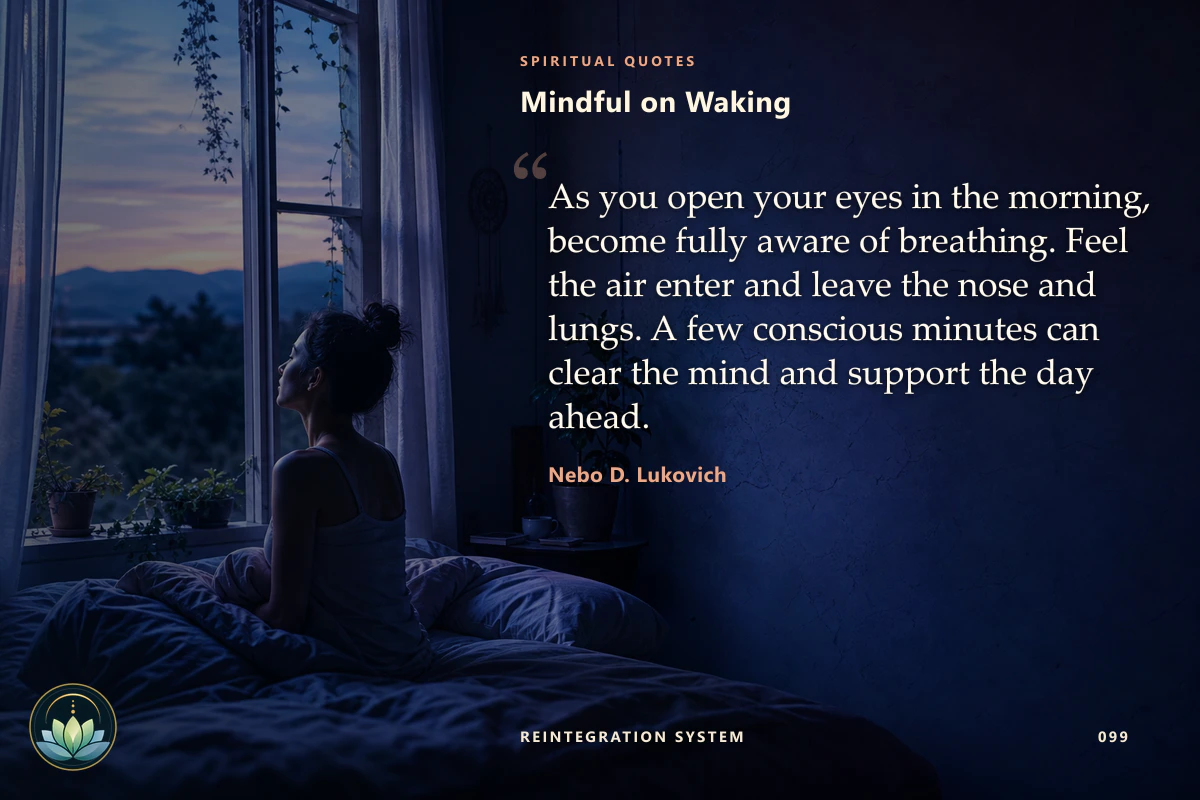
As you open your eyes in the morning, become fully aware of breathing. Feel the air enter and leave the nose and lungs. A few conscious minutes can clear the mind and support the day ahead.
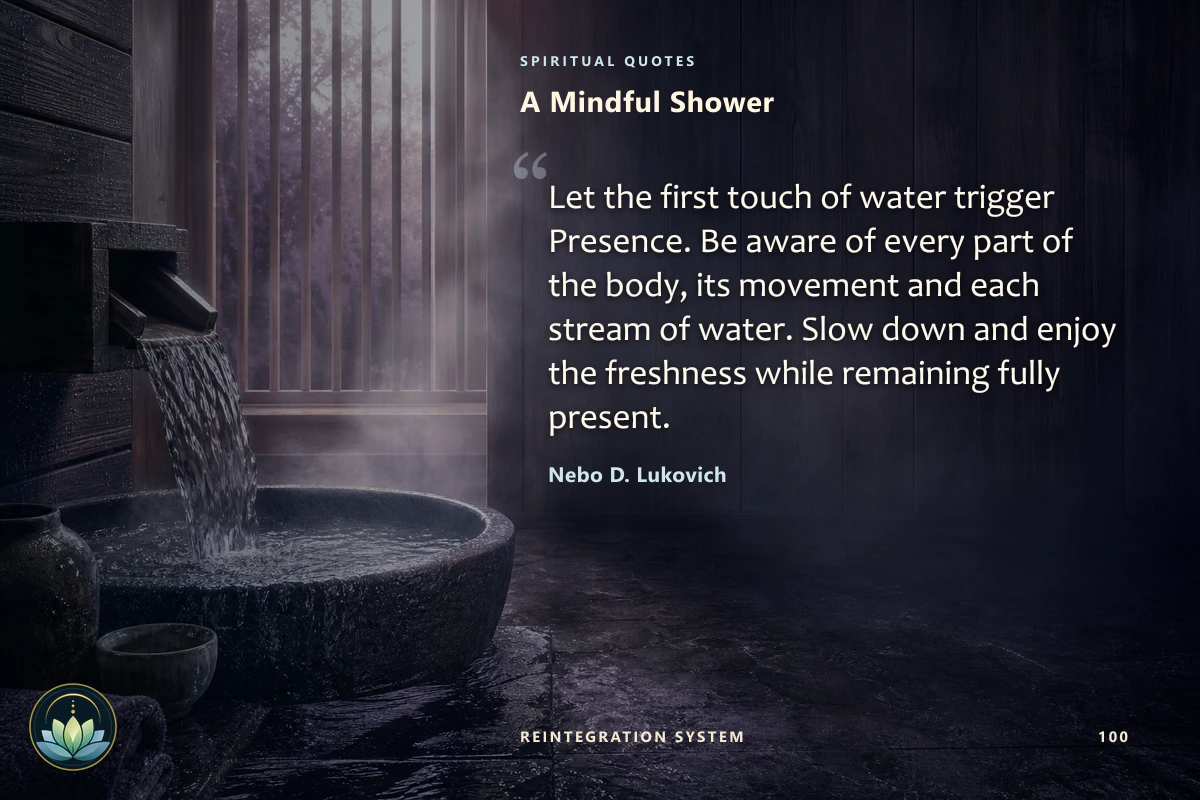
Let the first touch of water trigger Presence. Be aware of every part of the body, its movement and each stream of water. Slow down and enjoy the freshness while remaining fully present.
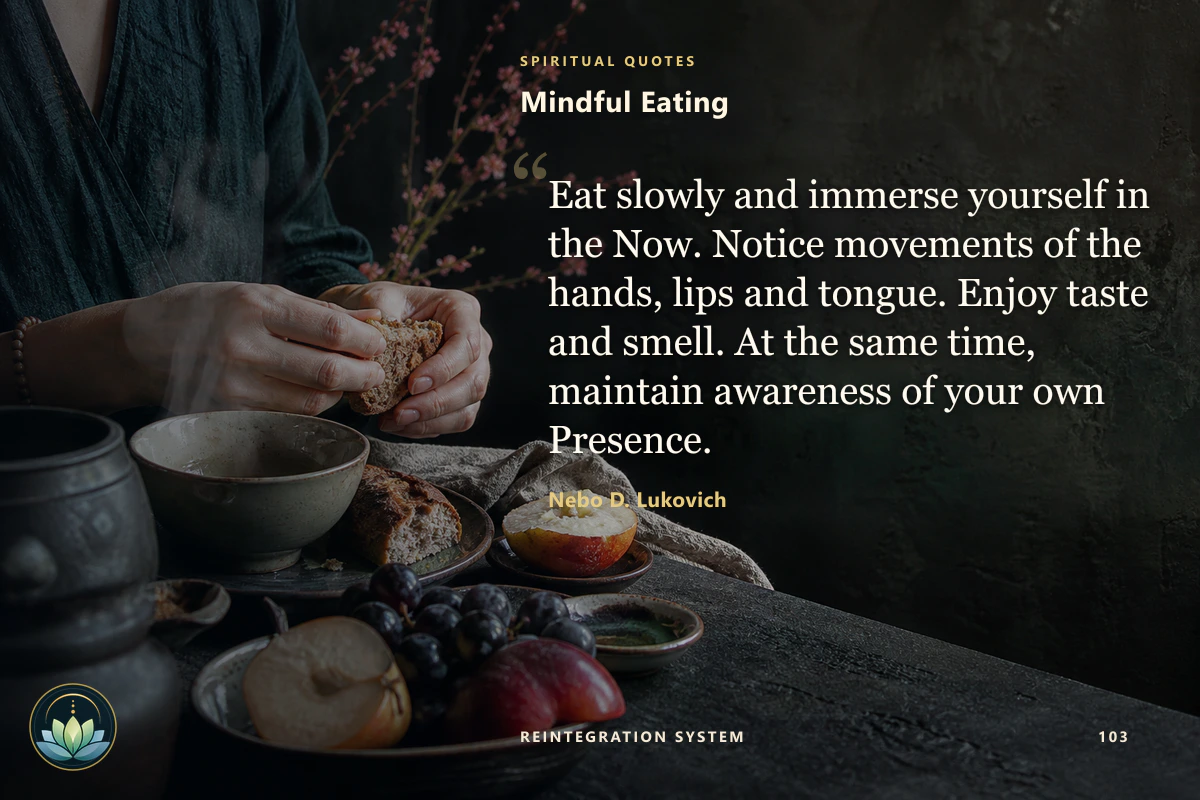
Eat slowly and immerse yourself in the Now. Notice movements of the hands, lips and tongue. Enjoy taste and smell. At the same time, maintain awareness of your own Presence.
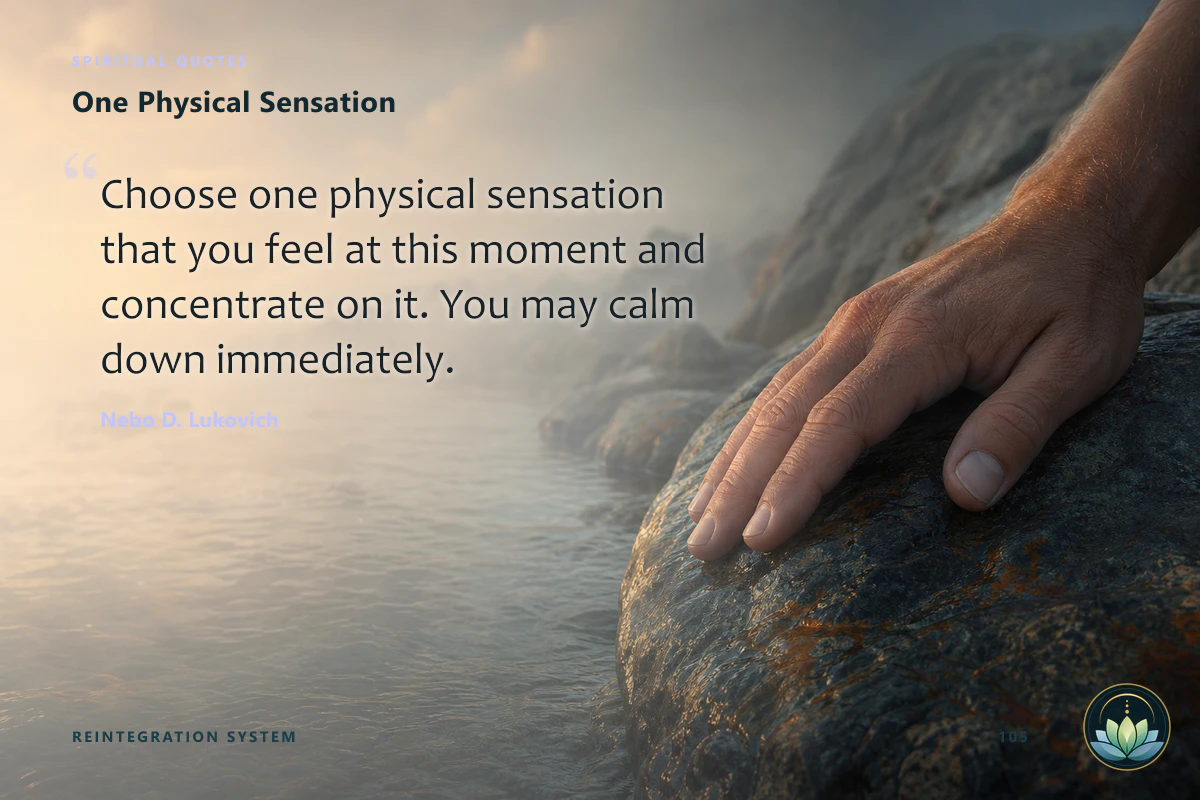
Choose one physical sensation that you feel at this moment and concentrate on it. You may calm down immediately.
If healing should come, it will come. Release expectation. Something wonderful may happen, even though we cannot know its form in advance.
When something feels extremely important, attachment may be present. Attachment creates suffering. Release excessive importance and make space for freedom.
13
Inner and outer reality as reflections within one interconnected field.
Our external world is a mirror of our inner being. Therefore, everyone is completely responsible for their own life.
Everything is interconnected. The apparent separation of entities is an illusion. The subject and their experience are inseparable.
Every person, event, problem and experience, whether positive or negative, has its origin within me. The world around us is a strange, relentless mirror.
If you cannot find something important within yourself, look around. You will find it in a symbolic form.
The Wheel of Life is a useful symbolic scheme that presents the general aspects of personality and their current condition in a different way.
The hologram is one of the keys to understanding the universe and our own spiritual growth. What is within us is around us, and vice versa.
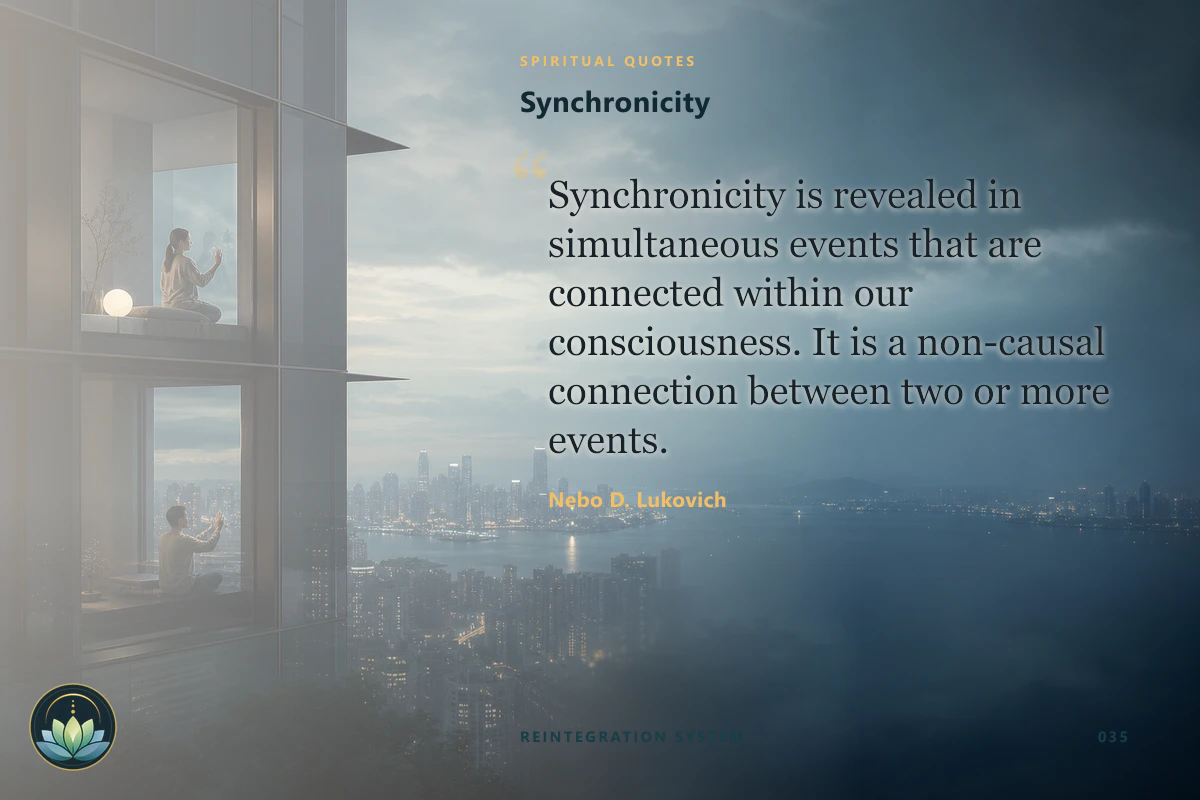
Synchronicity is revealed in simultaneous events that are connected within our consciousness. It is a non-causal connection between two or more events.
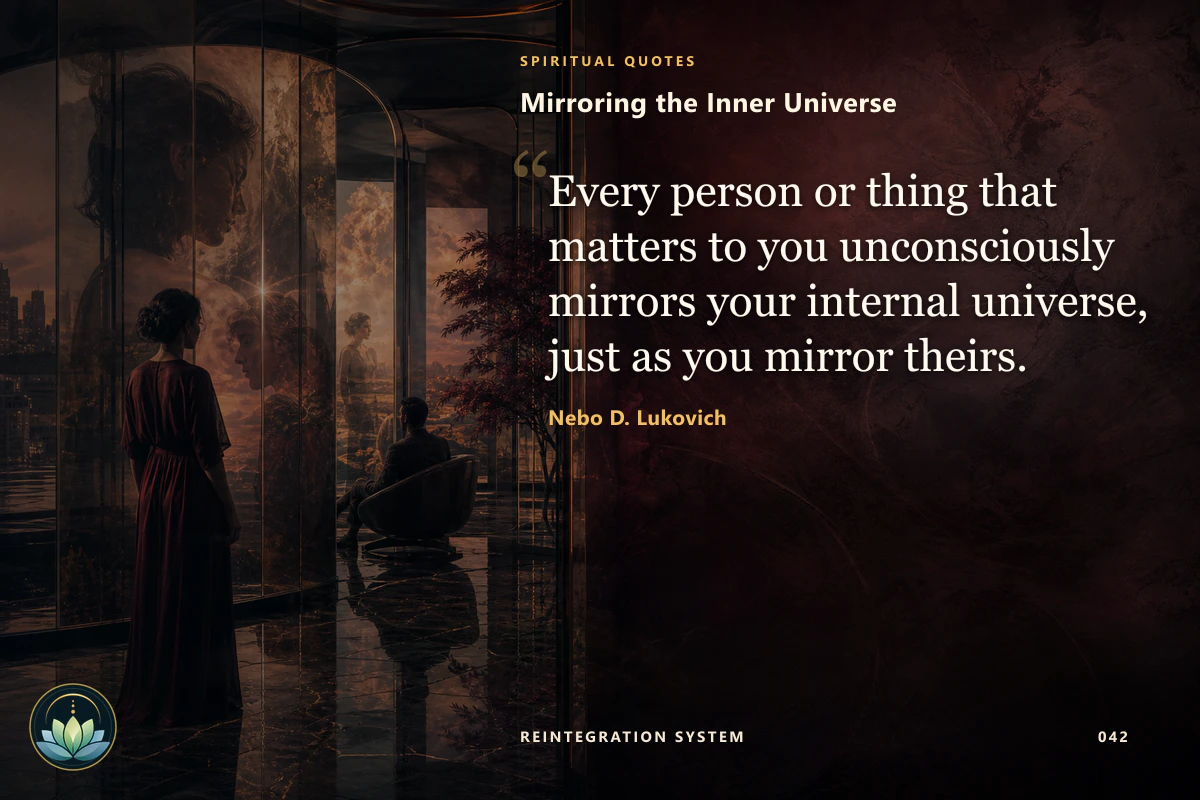
Every person or thing that matters to you unconsciously mirrors your internal universe, just as you mirror theirs.
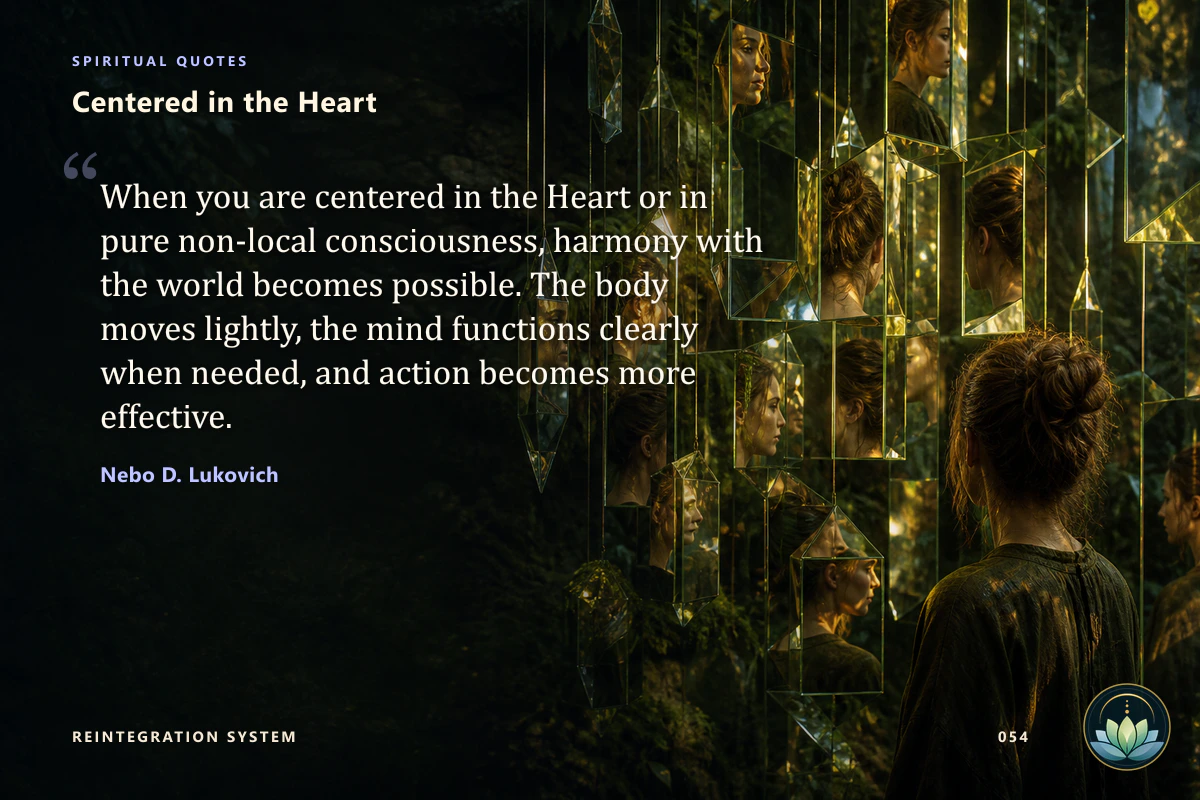
When you are centered in the Heart or in pure non-local consciousness, harmony with the world becomes possible. The body moves lightly, the mind functions clearly when needed, and action becomes more effective.
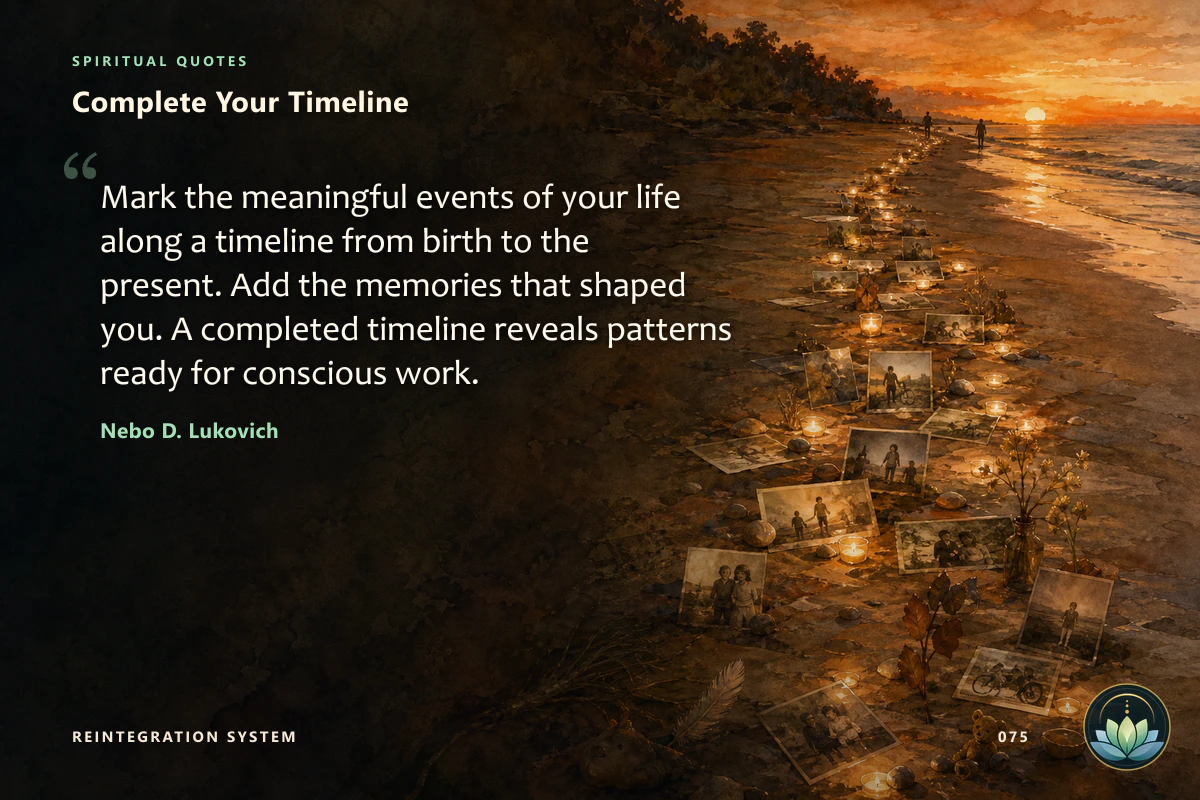
Mark the meaningful events of your life along a timeline from birth to the present. Add the memories that shaped you. A completed timeline reveals patterns ready for conscious work.
Suppressed desires, fears, beliefs, decisions, dreams, thoughts, emotions, memories, hopes and everything else within us are continuously projected onto the three-dimensional reality in which we live.
Through mindfulness you become aware of each movement, breath, thought, word, sensation and micro-decision. In that way you reunite the individual possibilities split by constant decision-making. You reunite yourself.
The outer reality is the “not-I” to each of us. As our reality is our counterpart, it must, by its very nature, be “finely tuned” to us in the sense of complementarity. Otherwise, we would not exist as “I,” nor would the Universe exist as the “not-I.” We are indivisible.
10
Consciousness, existence and the wider mystery that surrounds human experience.
There exists an underlying, supremely perfect reality independent of time and space, yet subtly present in all phenomena. Divine Presence can transform every experience in the best possible way.

You are the sky. Everything else is just the weather.
One does not become enlightened by imagining figures of light, but by making the darkness conscious. The latter procedure is disagreeable and therefore unpopular.
Enter a state of pure Not-Knowing toward an experience. Feel that you know nothing about it and allow that to be completely acceptable. For a while, rest in pure consciousness.
Mindfulness dissolves inner conflicts softly and almost imperceptibly. It can lead to a lasting state of expanded consciousness.
Notice the content of experience and the vantage point of the Temporary I. While breathing in, expand the sense of I until it outgrows itself and enters pure consciousness. While breathing out, imagine existence shrinking and disappearing into that consciousness. Rest where there is no separate I.
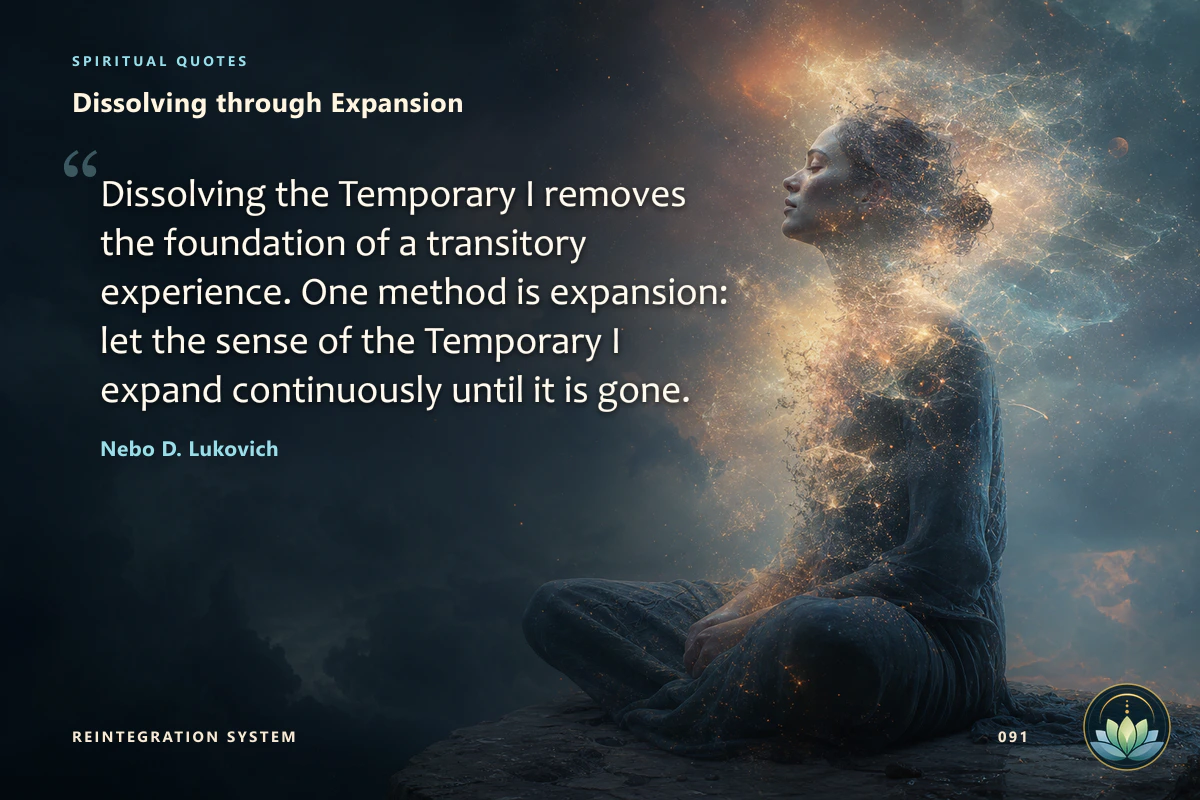
Dissolving the Temporary I removes the foundation of a transitory experience. One method is expansion: let the sense of the Temporary I expand continuously until it is gone.
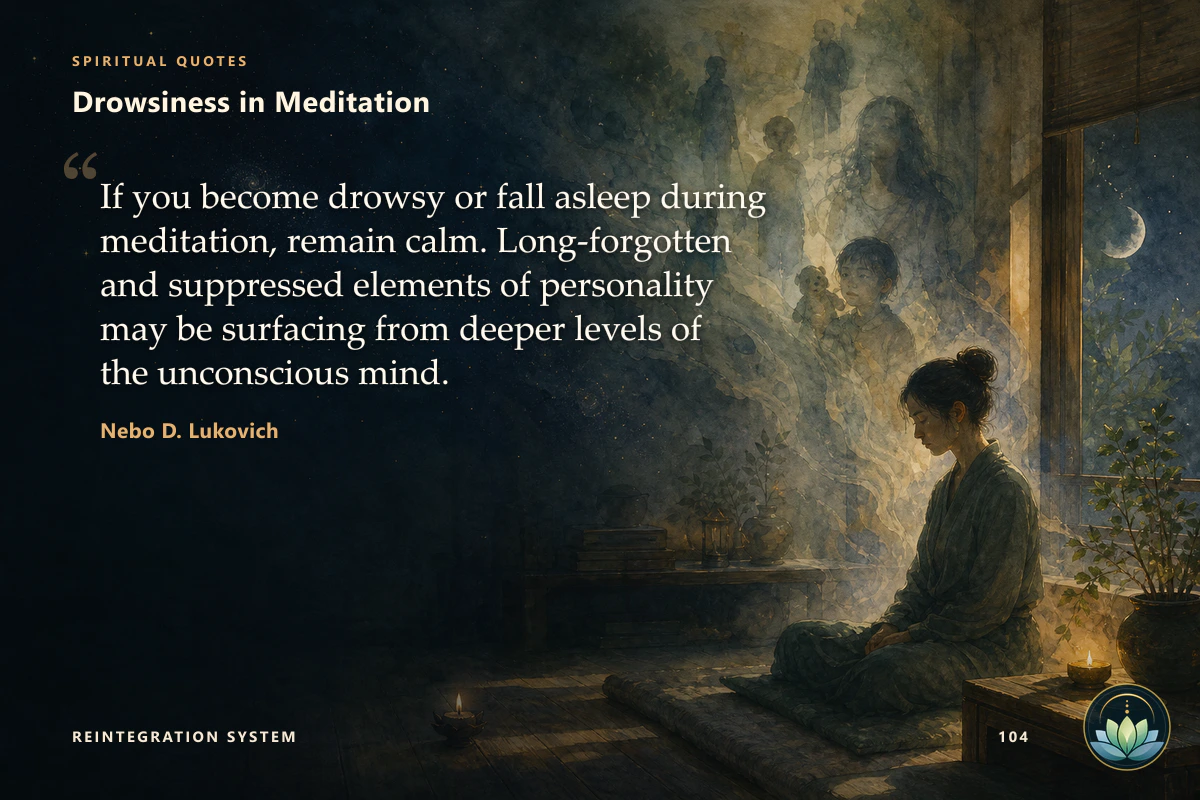
If you become drowsy or fall asleep during meditation, remain calm. Long-forgotten and suppressed elements of personality may be surfacing from deeper levels of the unconscious mind.
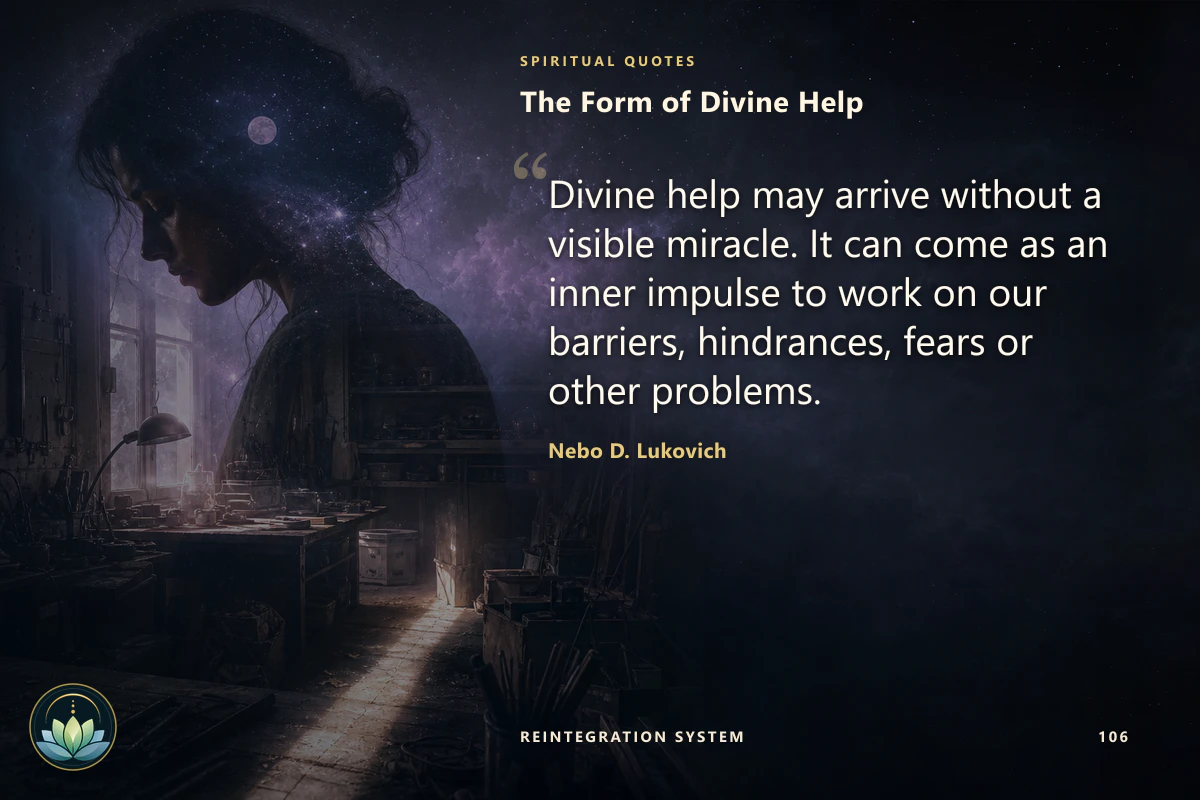
Divine help may arrive without a visible miracle. It can come as an inner impulse to work on our barriers, hindrances, fears or other problems.
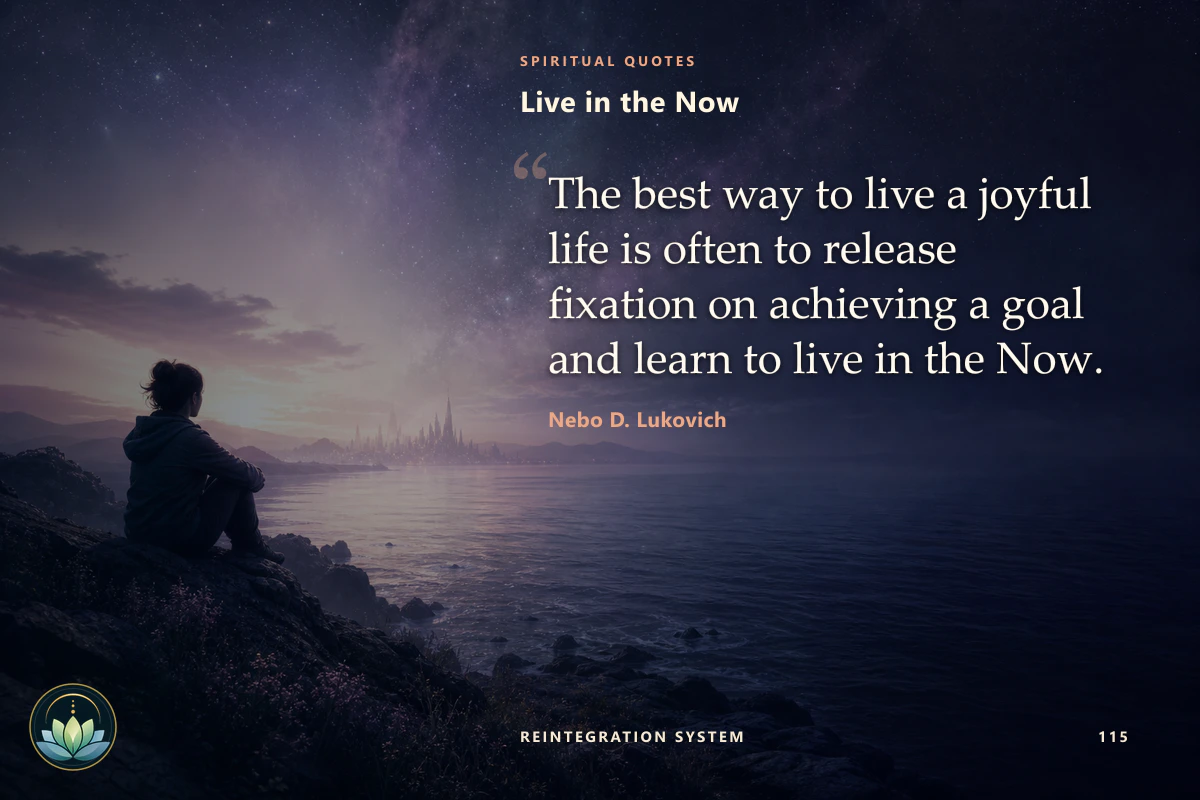
The best way to live a joyful life is often to release fixation on achieving a goal and learn to live in the Now.
05
Symbolic perspectives on observation, matter and the participatory nature of reality.
This is a world of polarities. Every imperfect state has its own imperfect, opposite state. Every negativity should be dealt with alongside its opposite.
Quantum particles change their behavior depending on the existence of an observer. Simply put, consciousness subtly influences matter.
When you choose one concrete course of action, you divide the individual universe of infinite possibilities into two parts: the one in which you acted, and all the others in which you did not.
Beliefs are centers of gravity for our behavior, perception of the world, thinking and emotional experience.
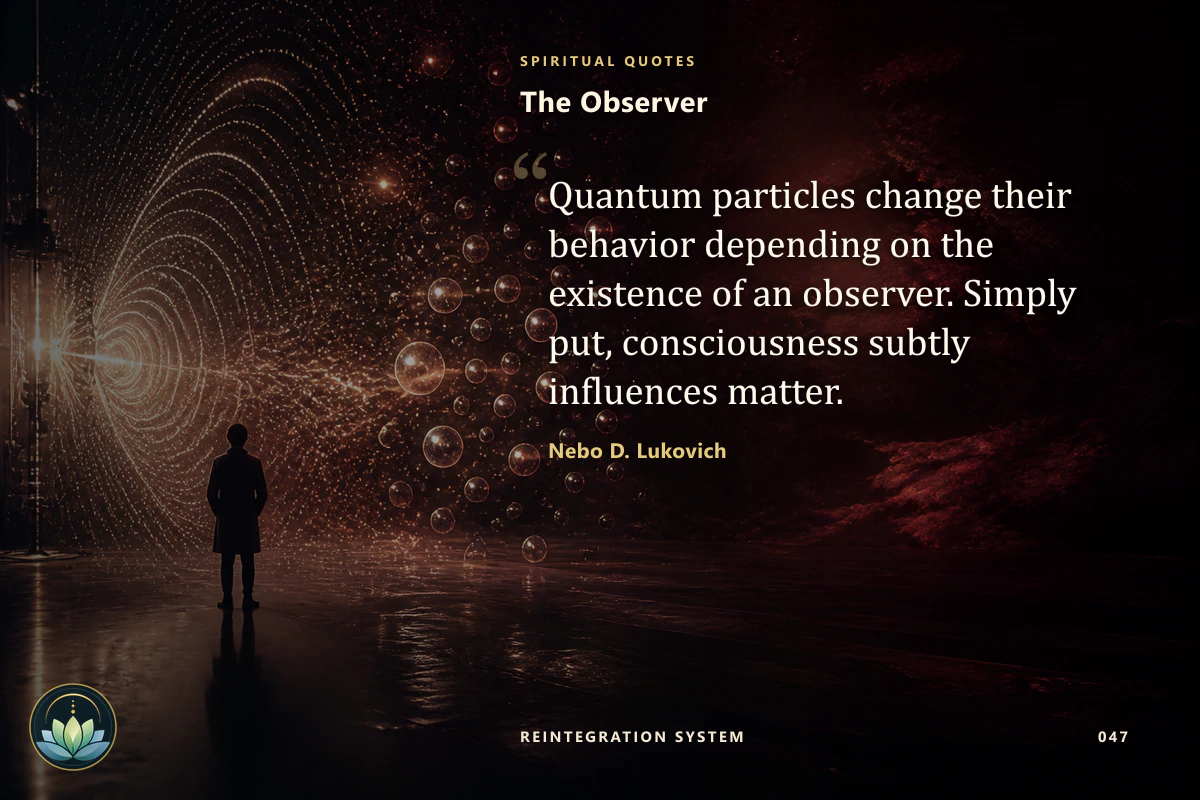
Quantum particles change their behavior depending on the existence of an observer. Simply put, consciousness subtly influences matter.
The interpretive backgrounds in the Inner Sparks collection were generated with AI to reflect the themes of the quotations. The quotations and credited authors remain unchanged.