

The areas that deserve attention vary from person to person. For a practical overview, the Reintegration System groups the main elements of personality into the following areas:
- General aspects of personality
- Habits
- Beliefs
- Decisions
- Traumatic memories
- Emotions
- Fears
- Guilt and resentment
- Desires
- Traits
The diagram below shows how these elements can overlap within conscious and repressed layers of experience.
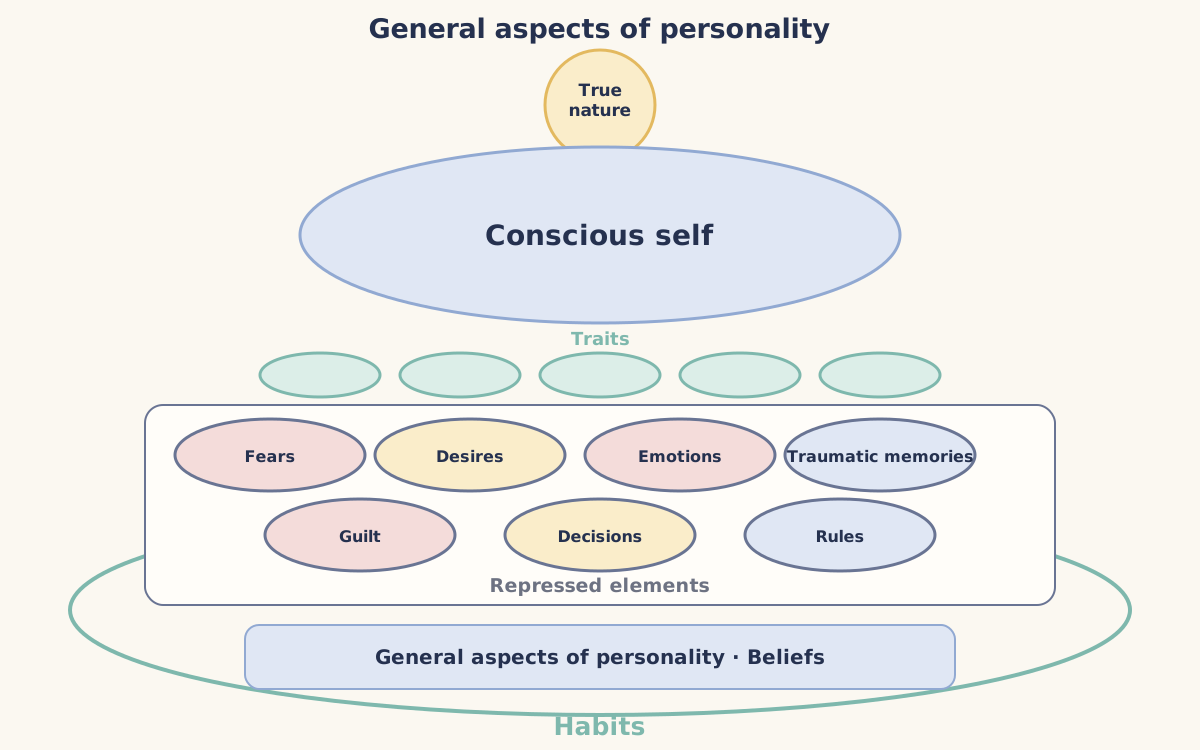
These categories overlap. Desires, fears, and guilt can be understood as emotional patterns. Emotions may also be linked with traumatic memories, while beliefs can become habitual thoughts supported by emotion. The categories are practical guides. They are neither rigid diagnoses nor separate entities.
Many approaches try to suppress unwanted patterns. Reintegration work begins with careful recognition of their function, intention, and history. This approach follows the fourth postulate of the system, which treats perceived negativity as something whose original purpose can be understood and transformed.
Integration means helping an unwanted pattern release its limiting form while preserving useful insight, protection, or intention. The process aims to return the pattern to a more coherent place within the whole personality.
The book Deep Personal Transformation presents a fuller discussion of these personality elements and practical ways of working with them.